
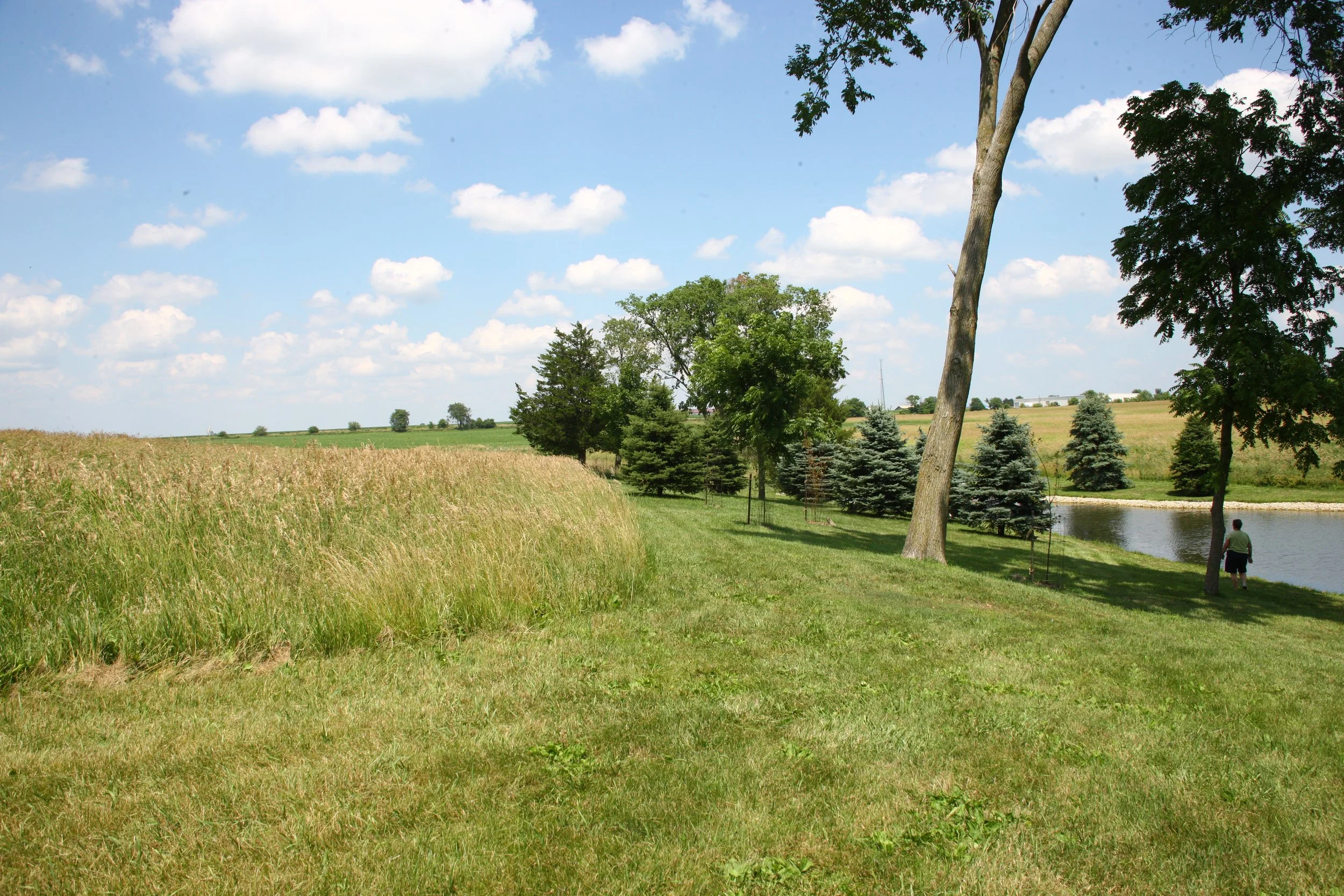
Pleasant Grove Heritage Park is open from dawn to dusk. Enjoy a walk along the mowed trail that loops around the site, try your luck at the catch-and-release fishing pond, or relax on one of the many benches. A new pavilion and benches will be added in 2026, providing inviting spaces to enjoy a picnic lunch and further enhance your park experience.
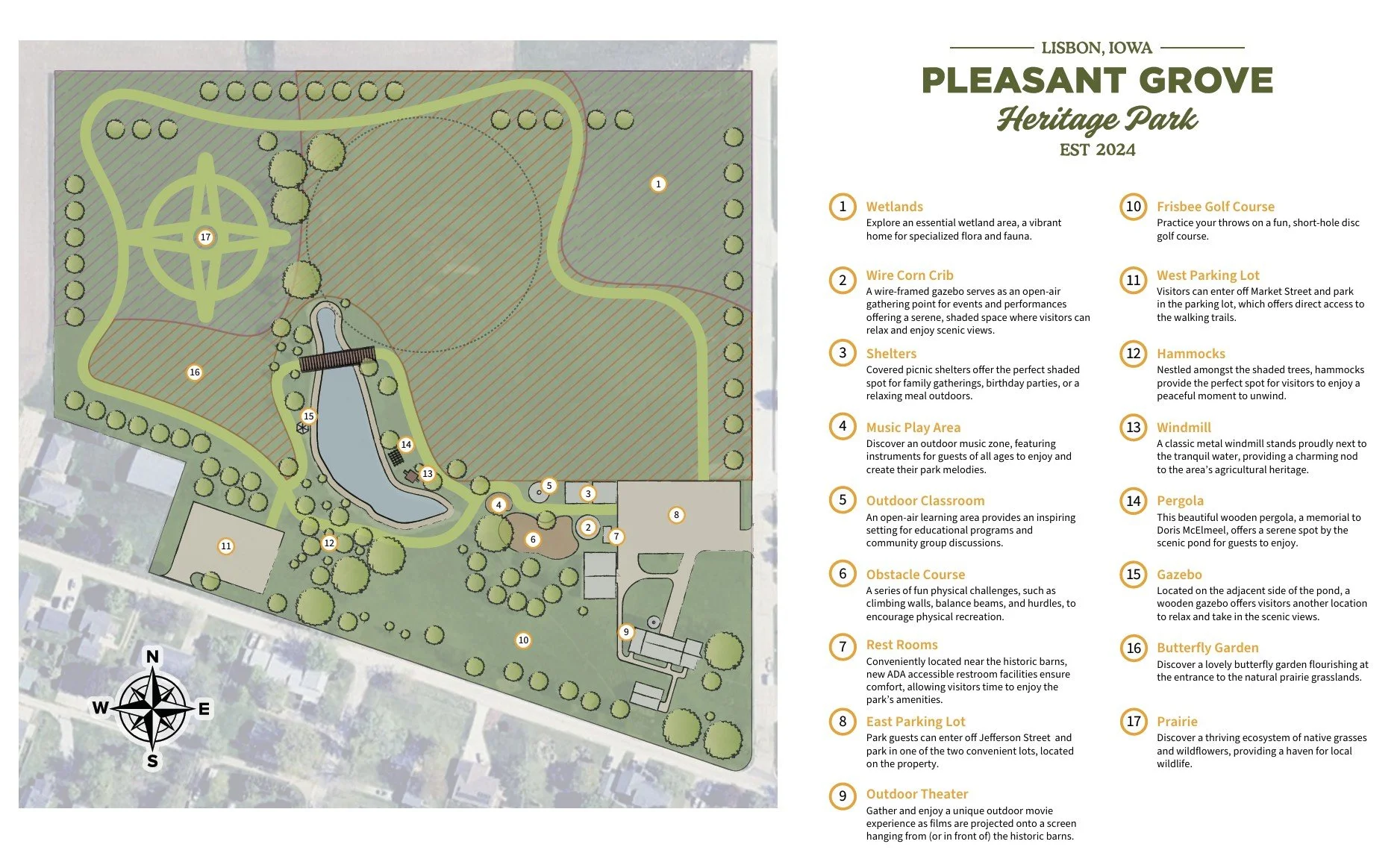
Park Master Plan
Vision Statement
To create a 15-acre park in Lisbon, Iowa, that offers a meaningful visitor experience while honoring the legacy of the Meyers and McElmeel families, stewards of this land since 1881. The park will blend natural beauty with agricultural and conservation education while integrating the Meyers Farmstead Historic District through restored barns and supportive spaces. It will stand as a lasting tribute to the land's heritage and beauty.
The Pond
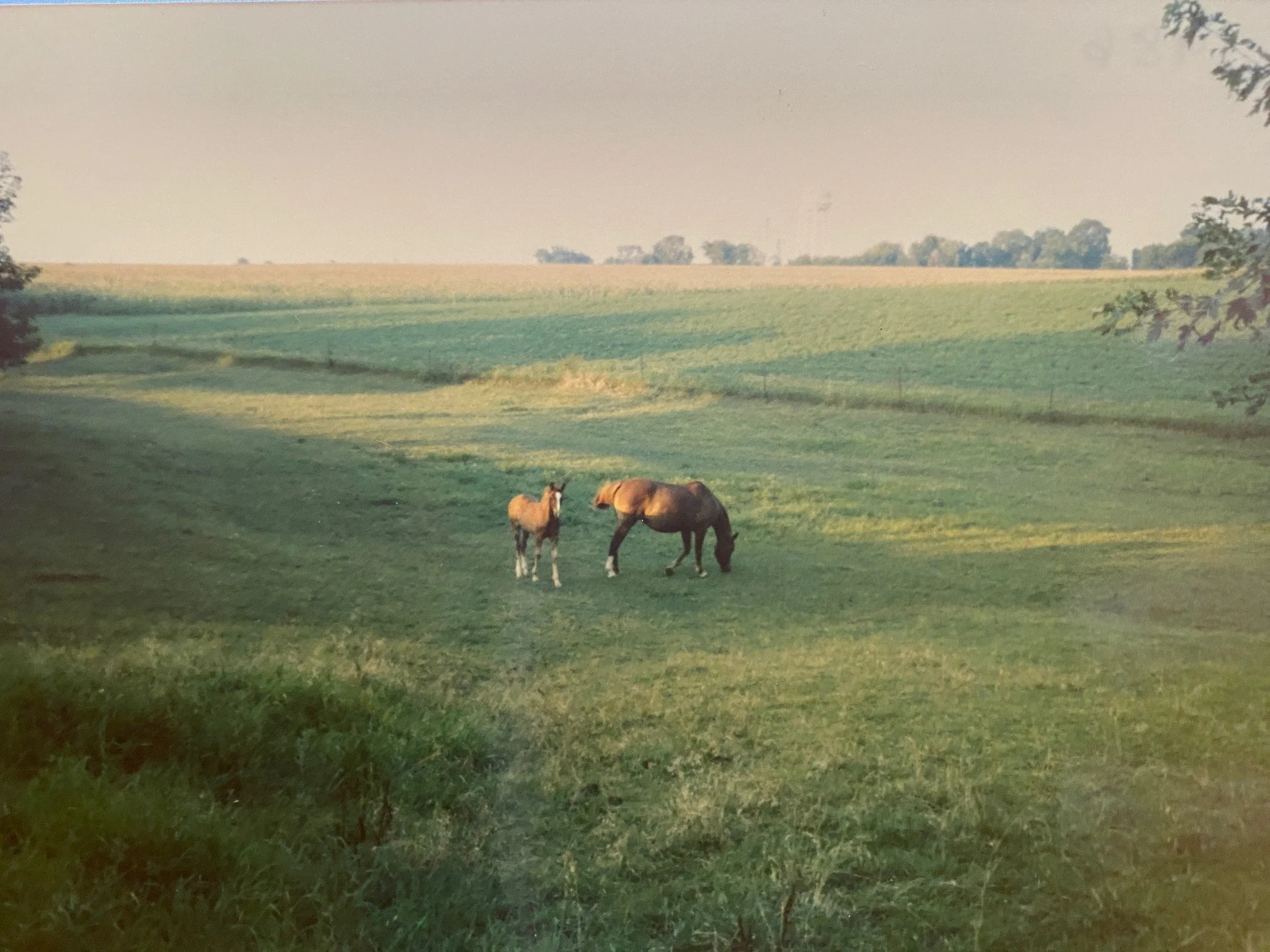
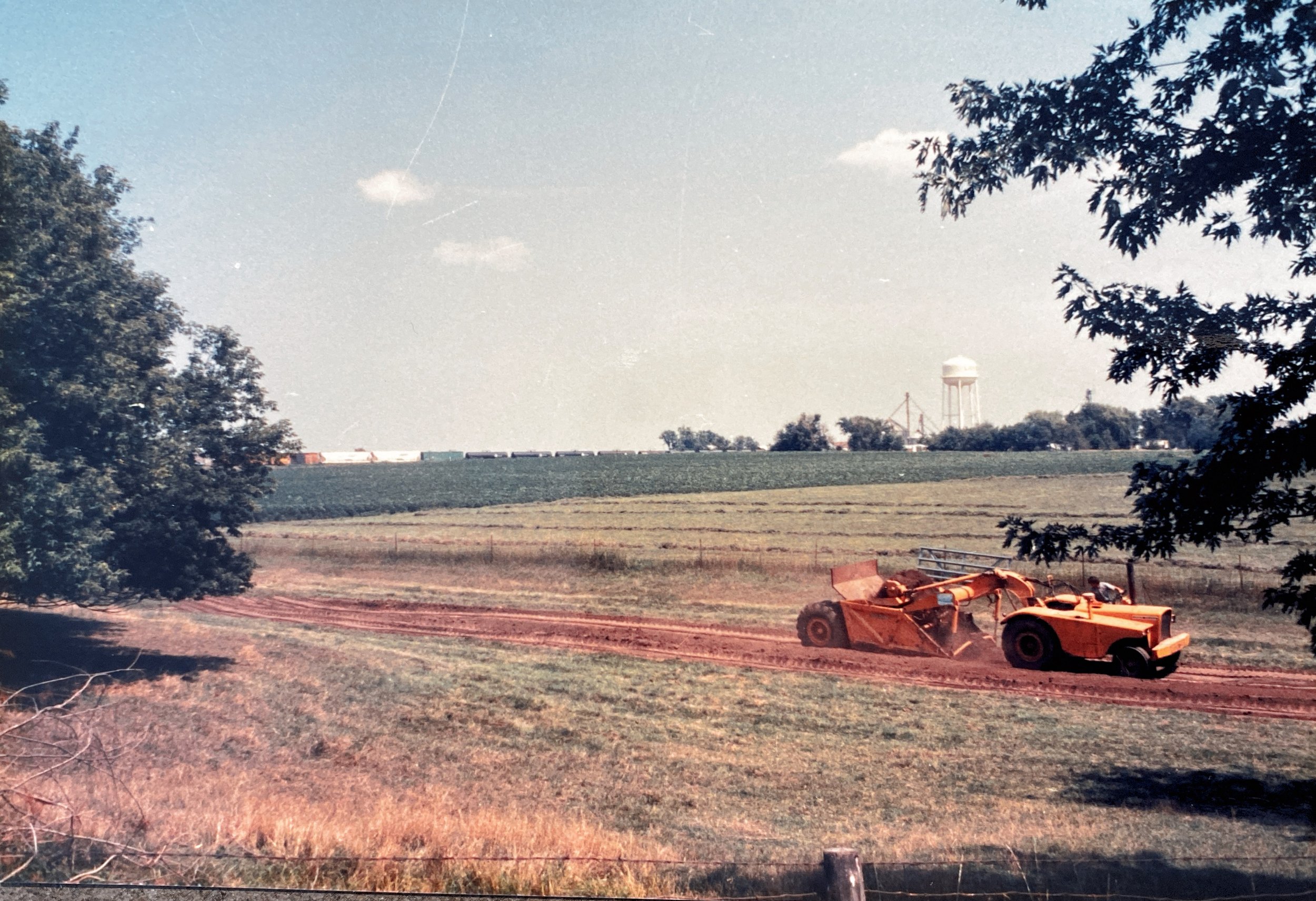
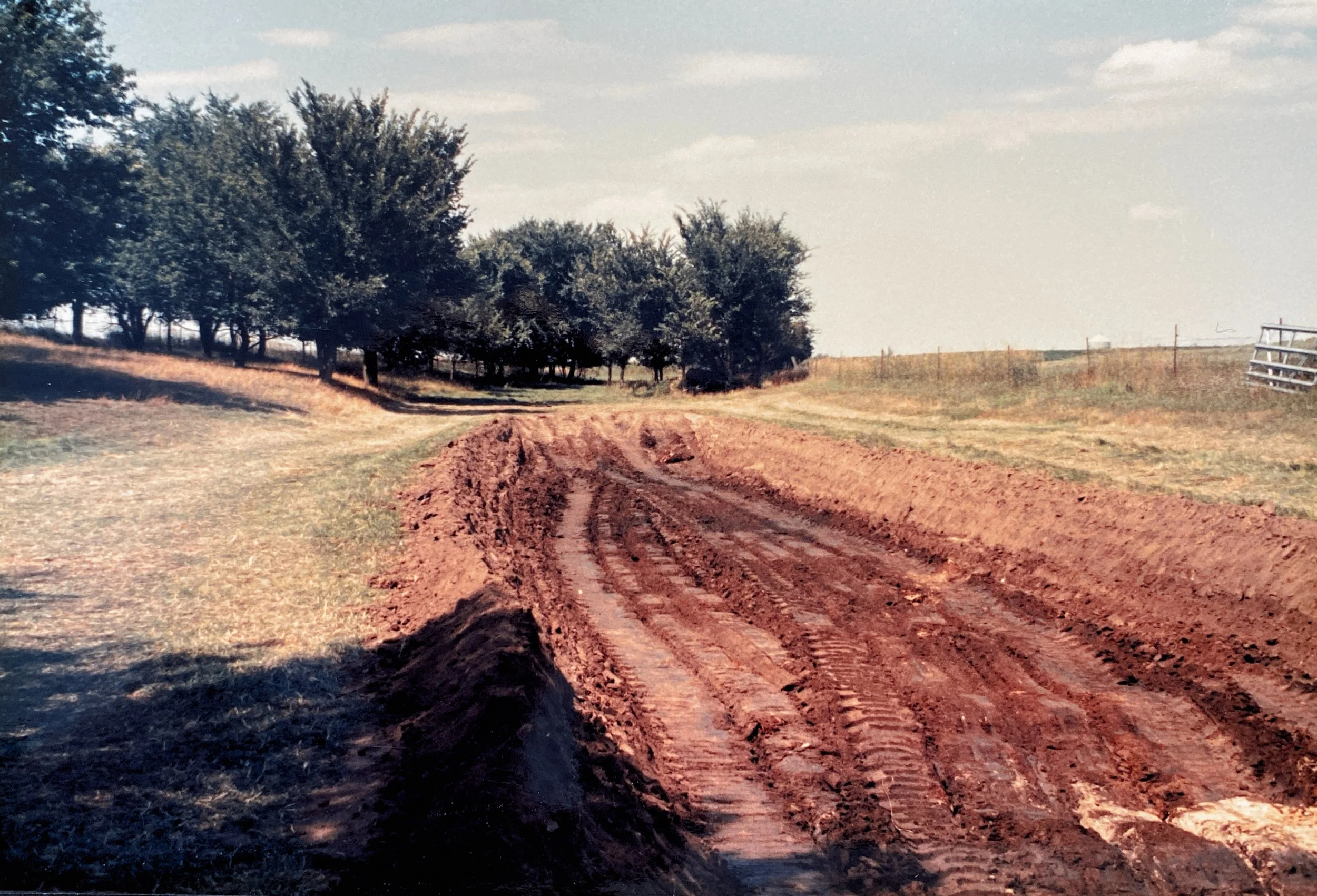
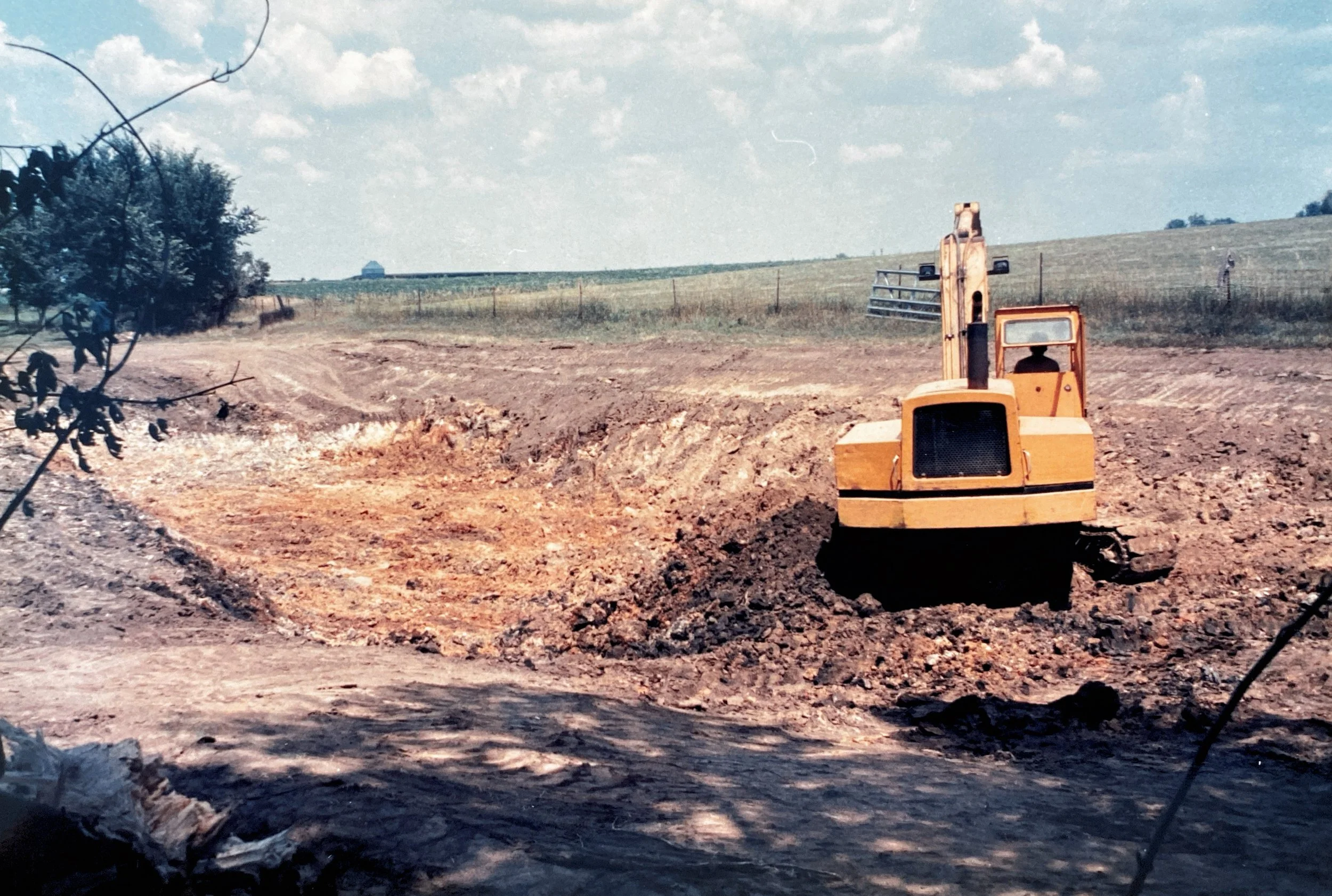
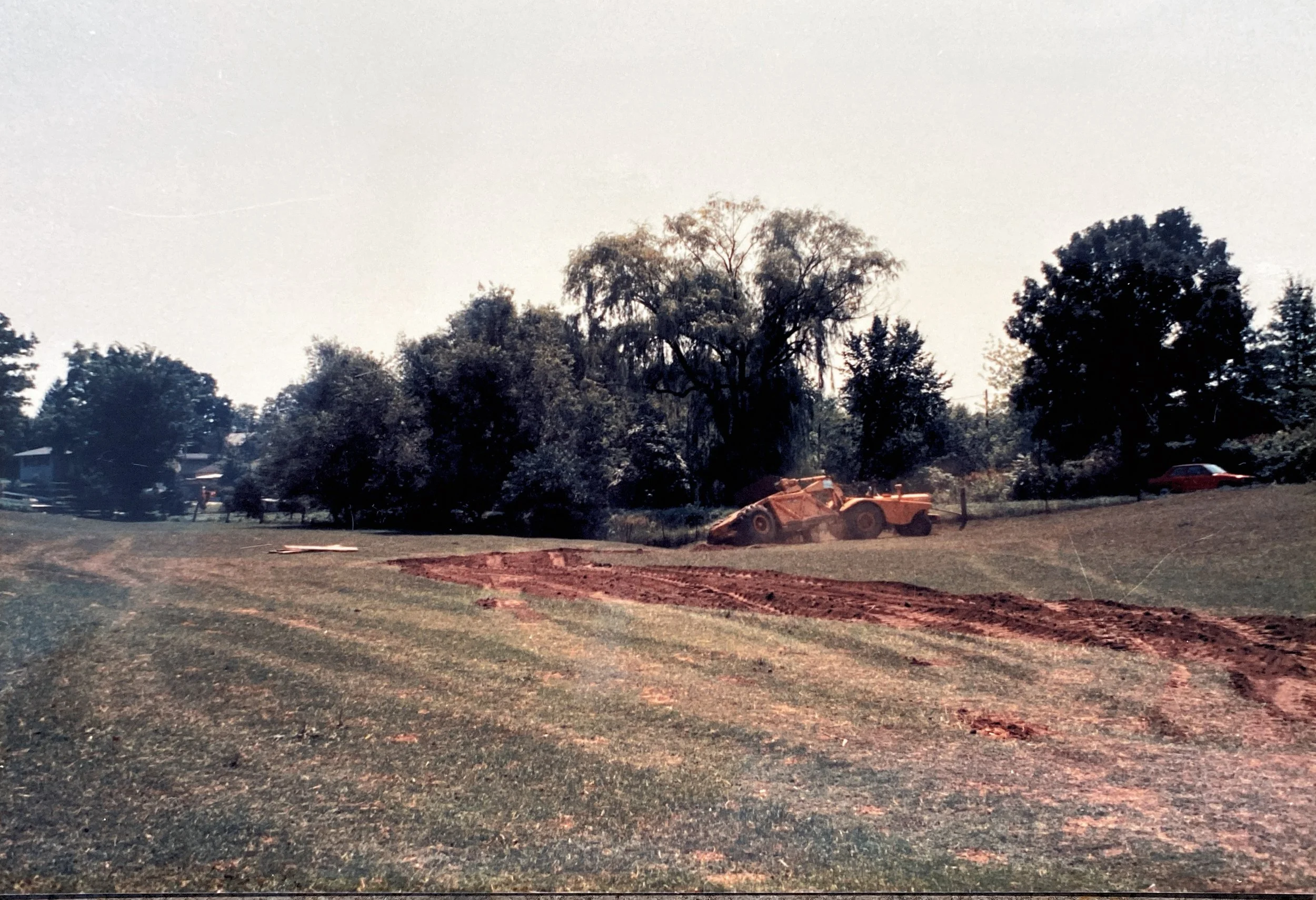
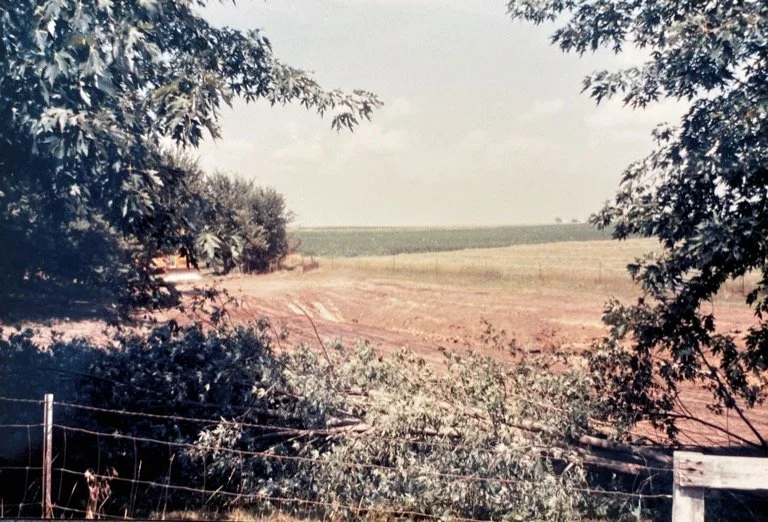
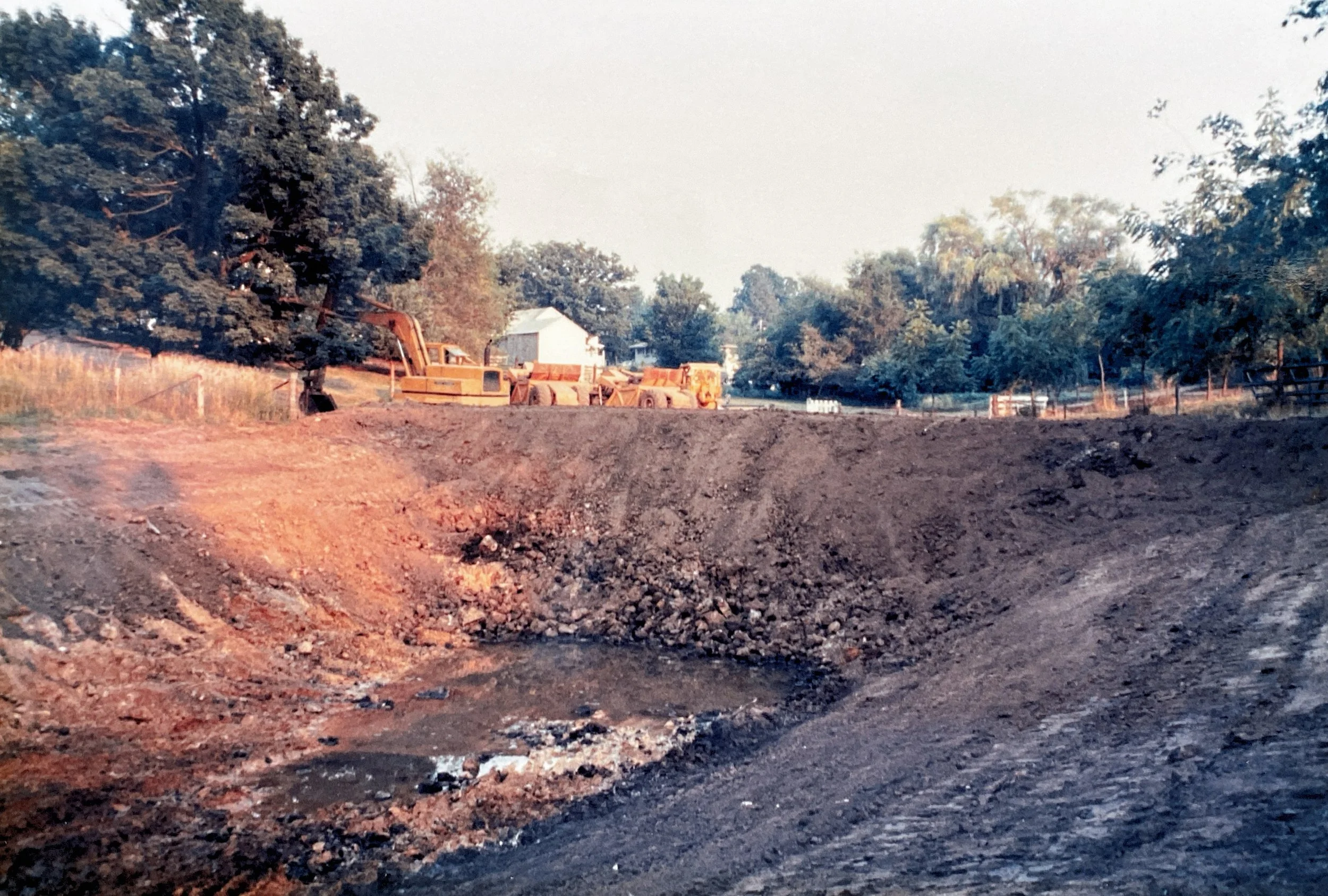
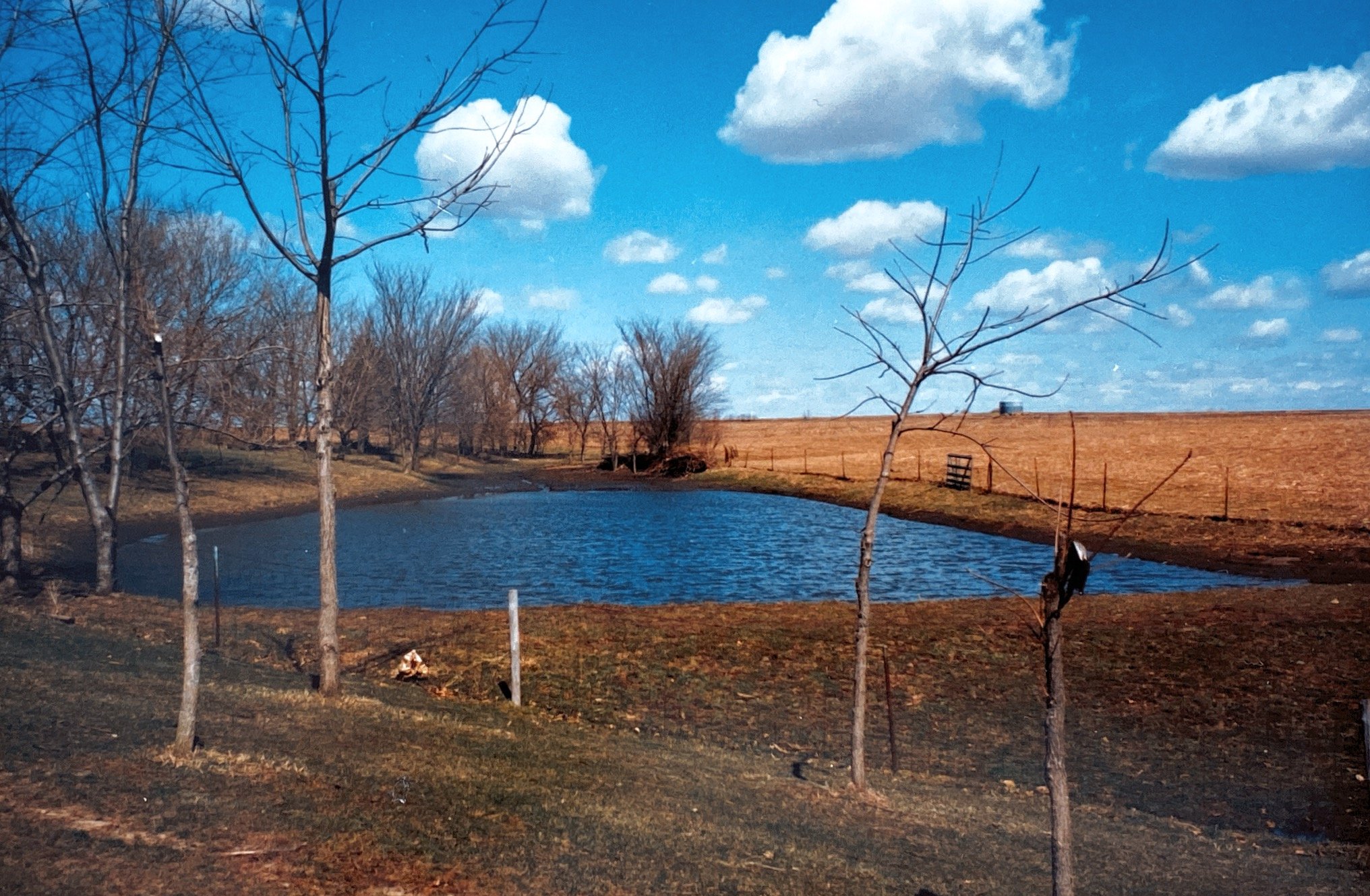
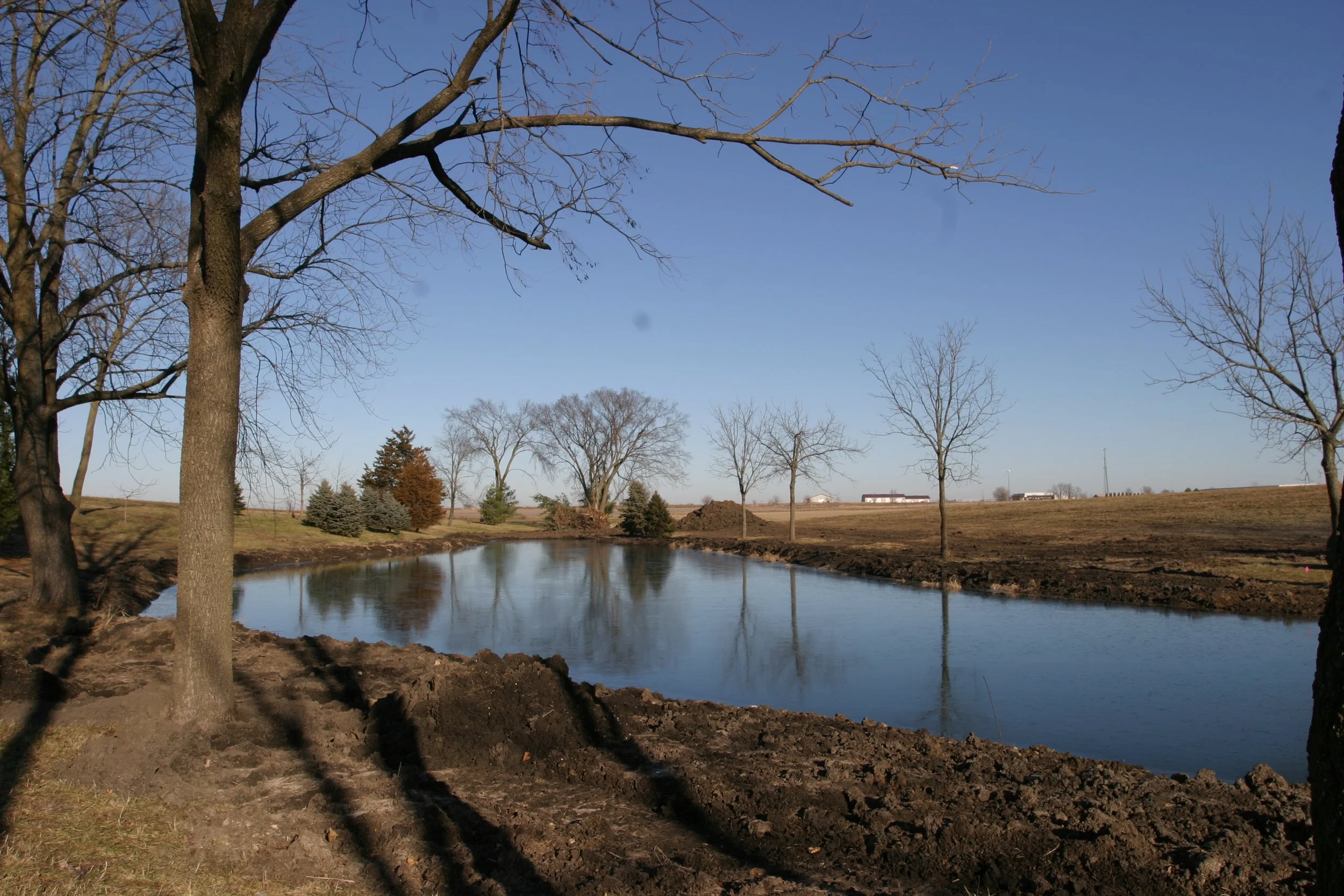
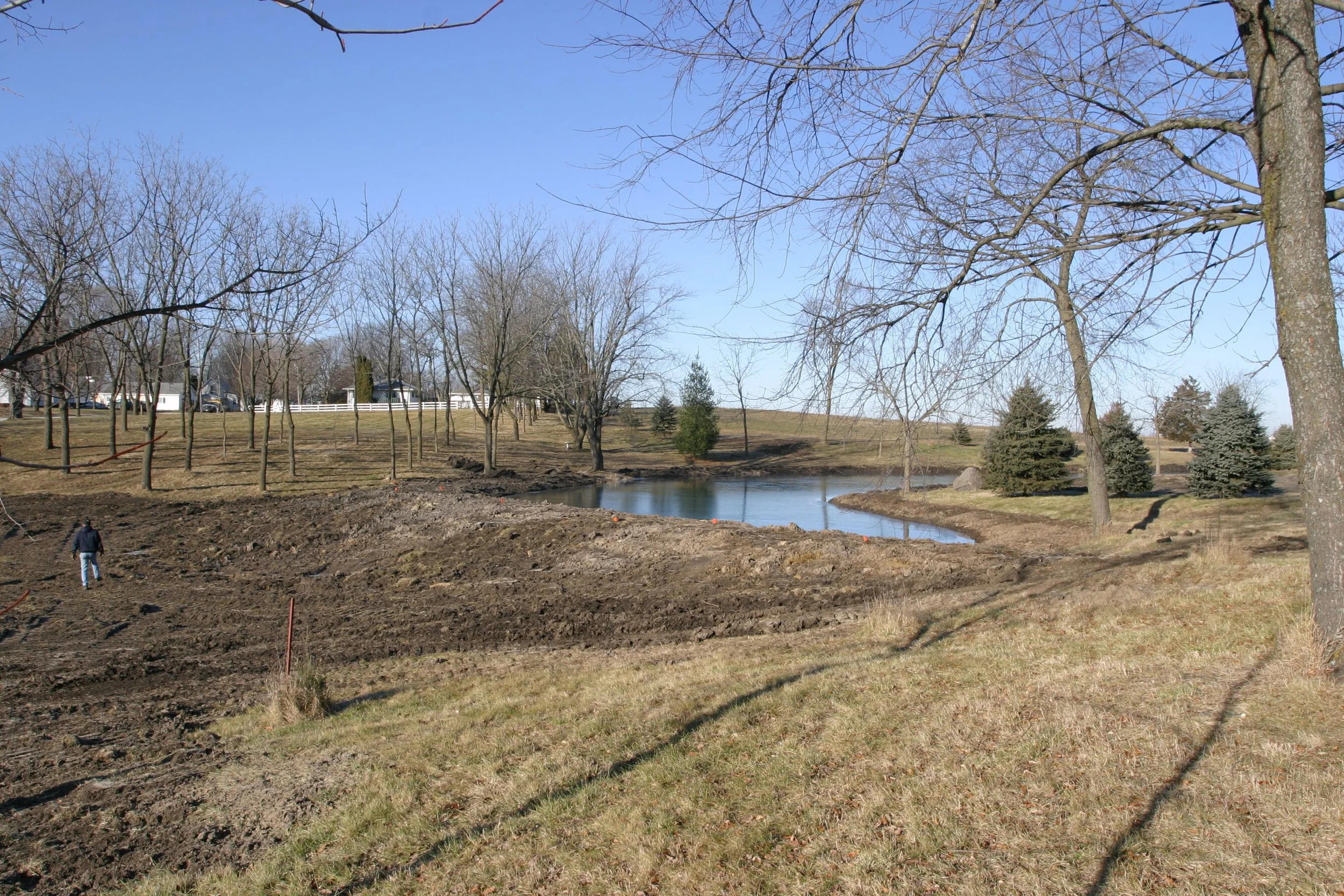
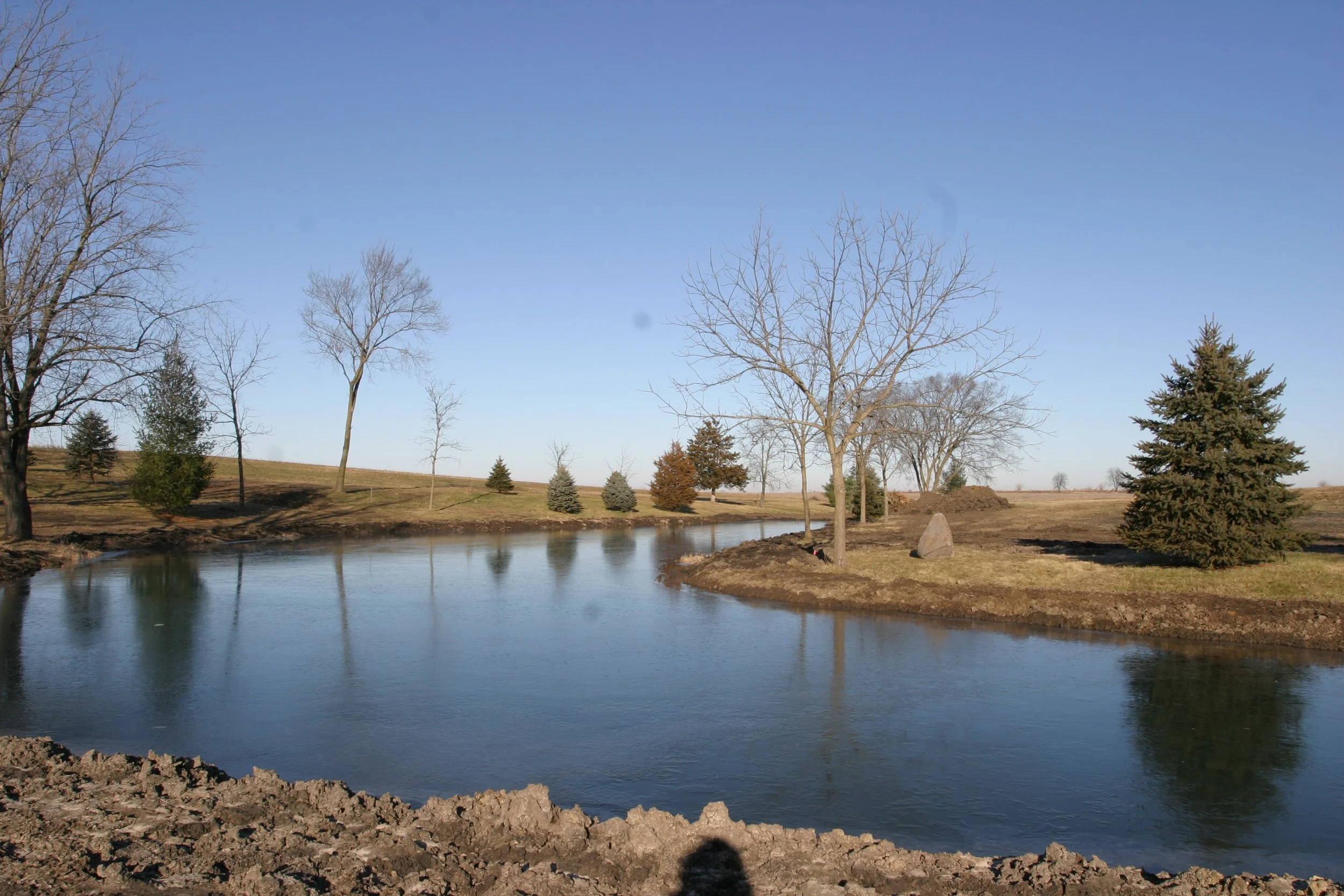
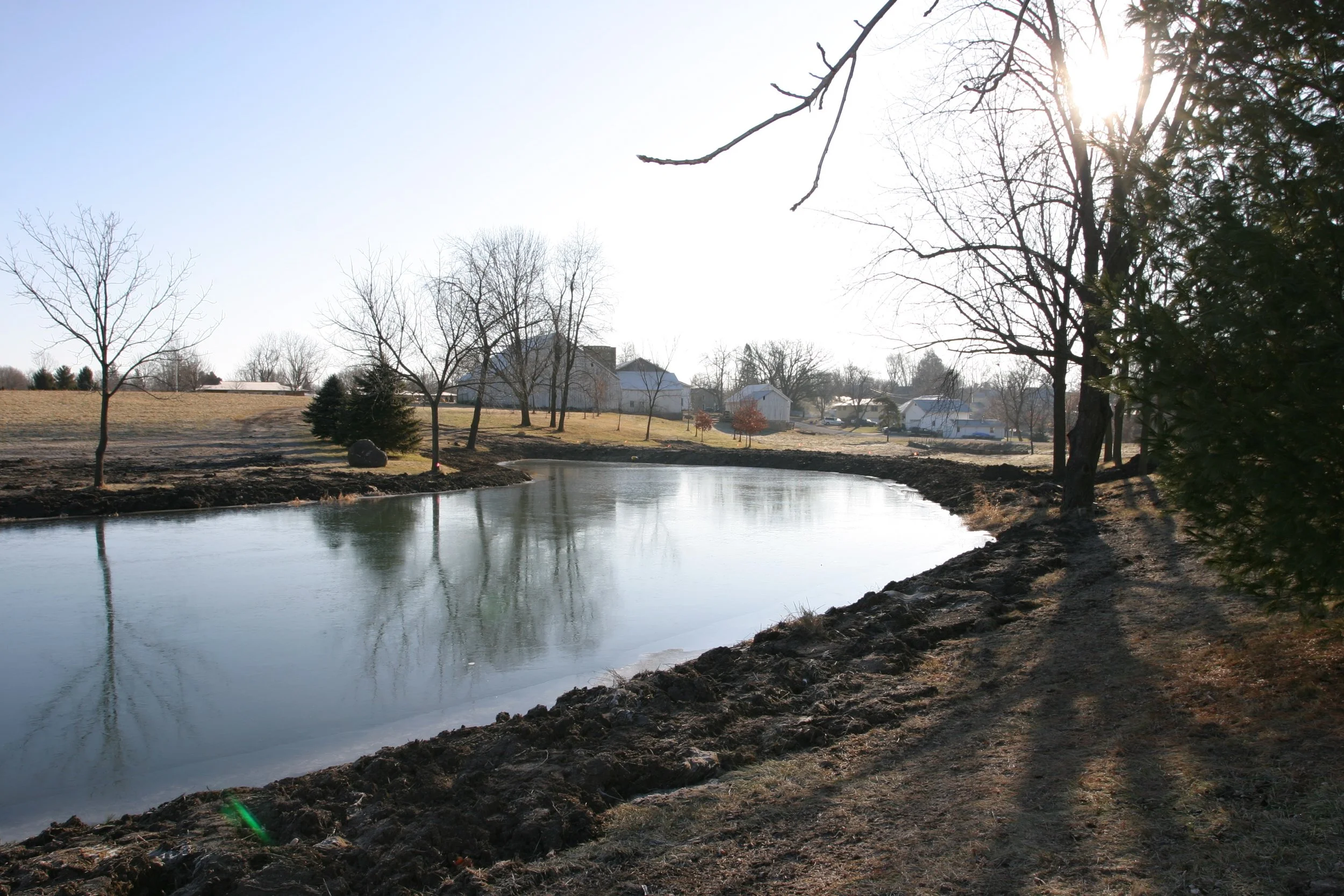
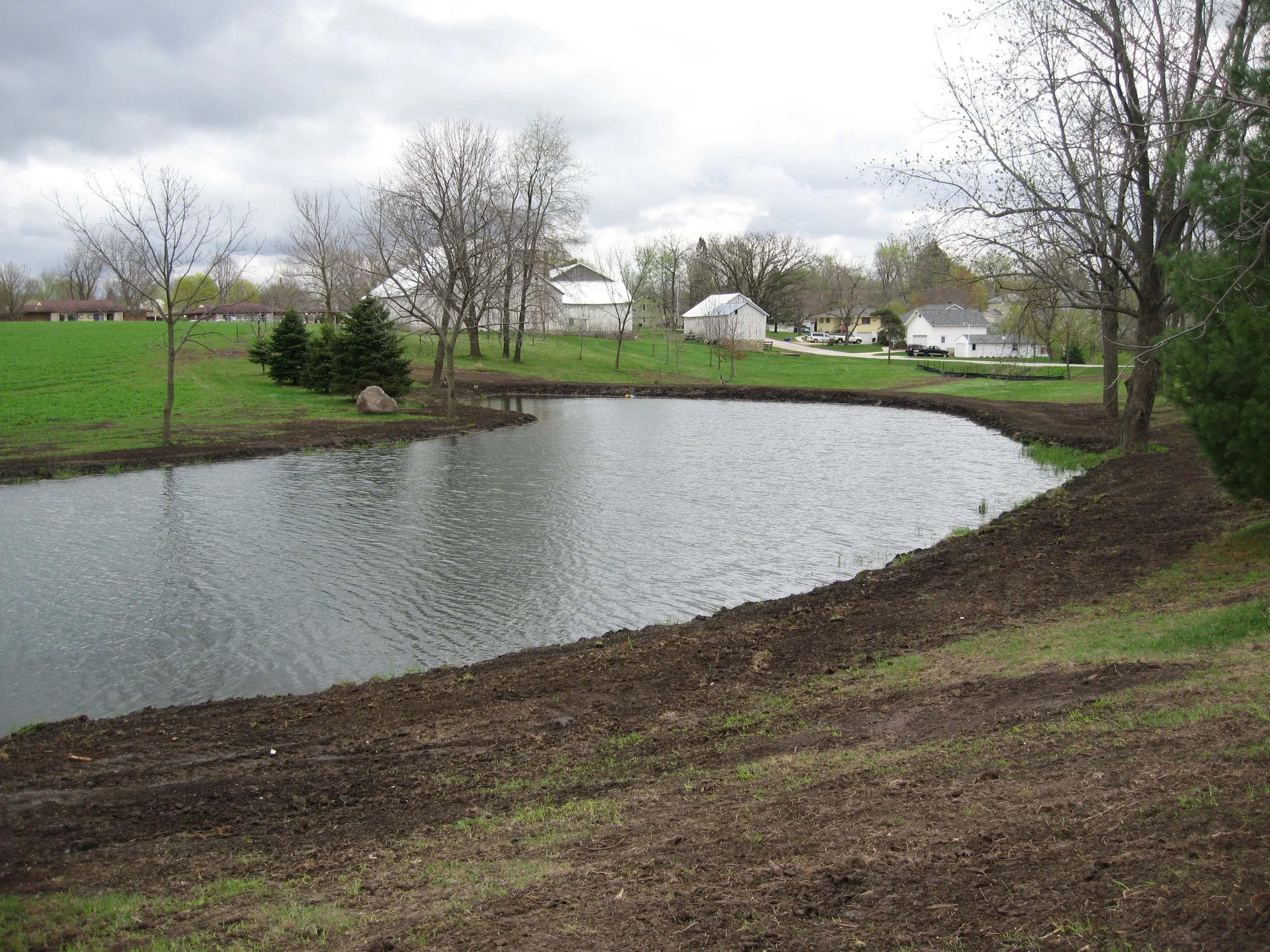
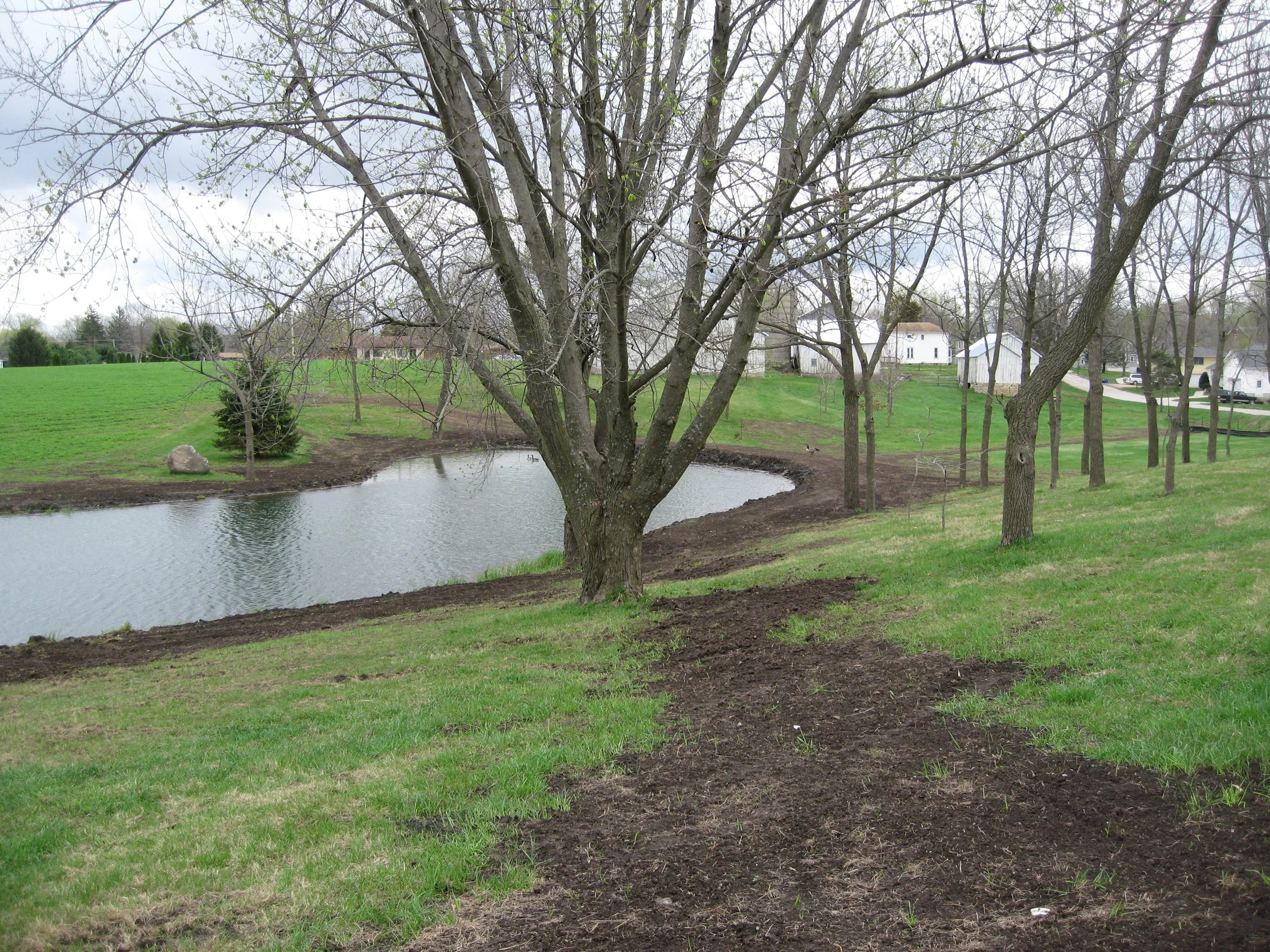
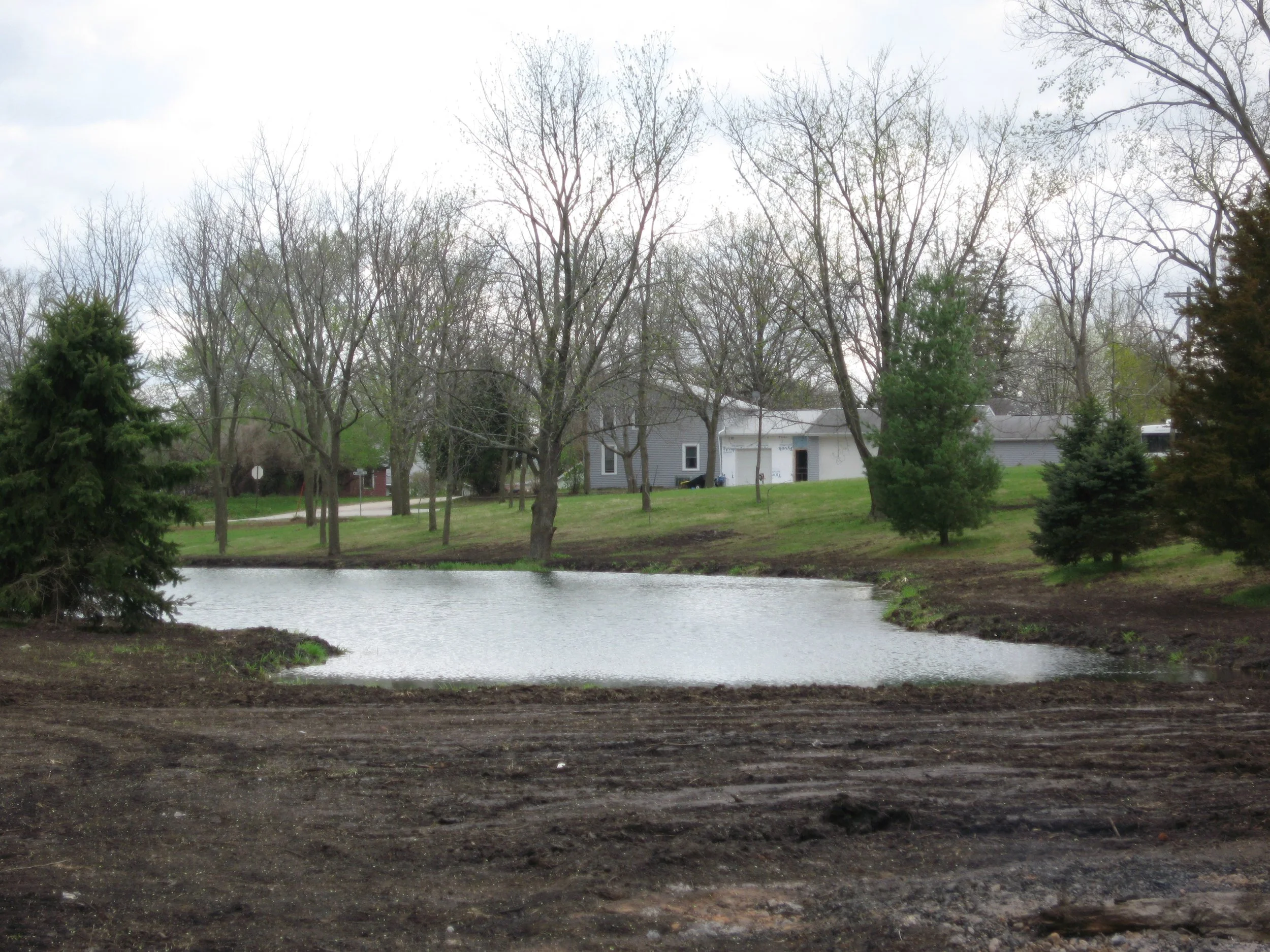
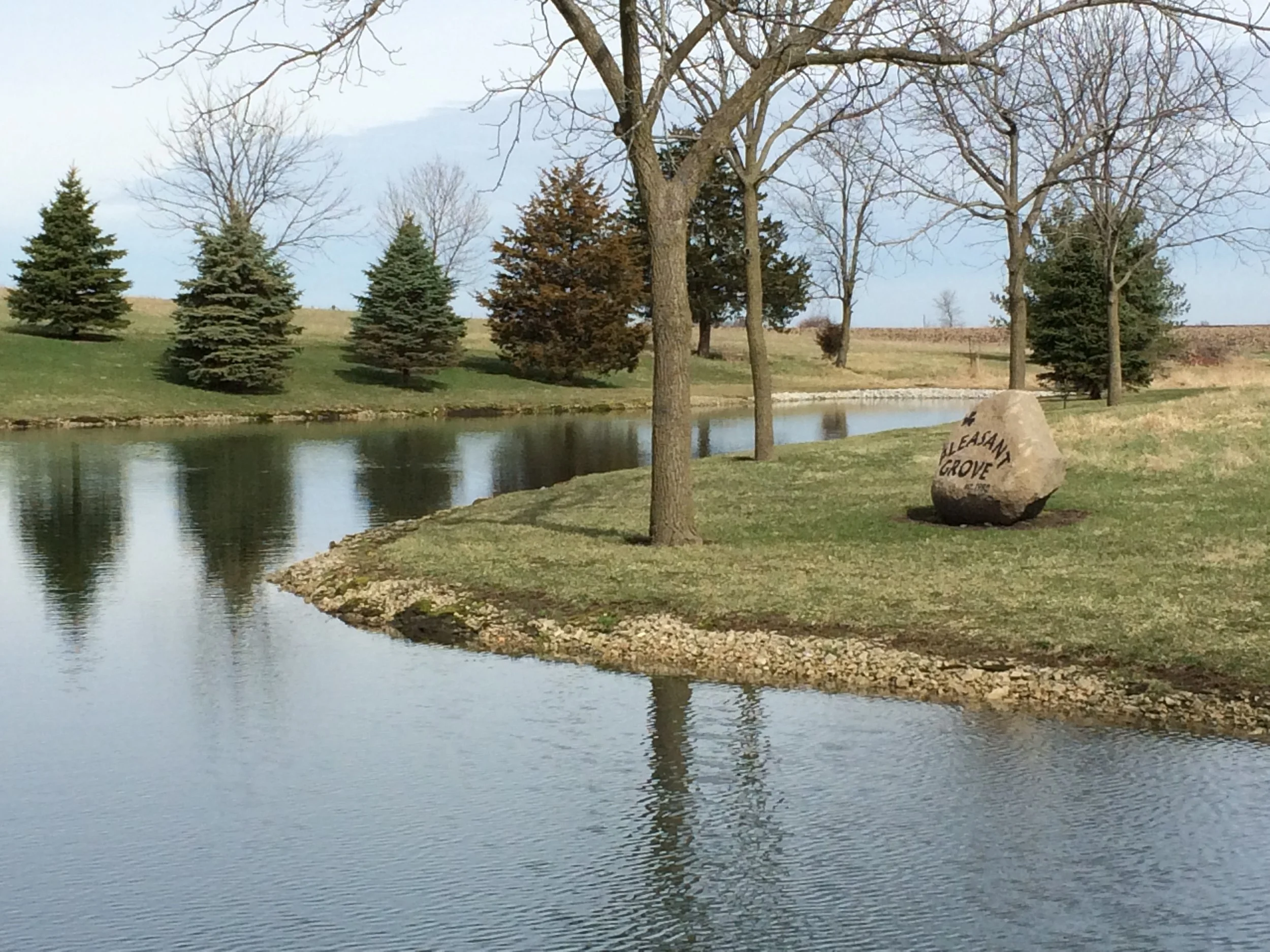
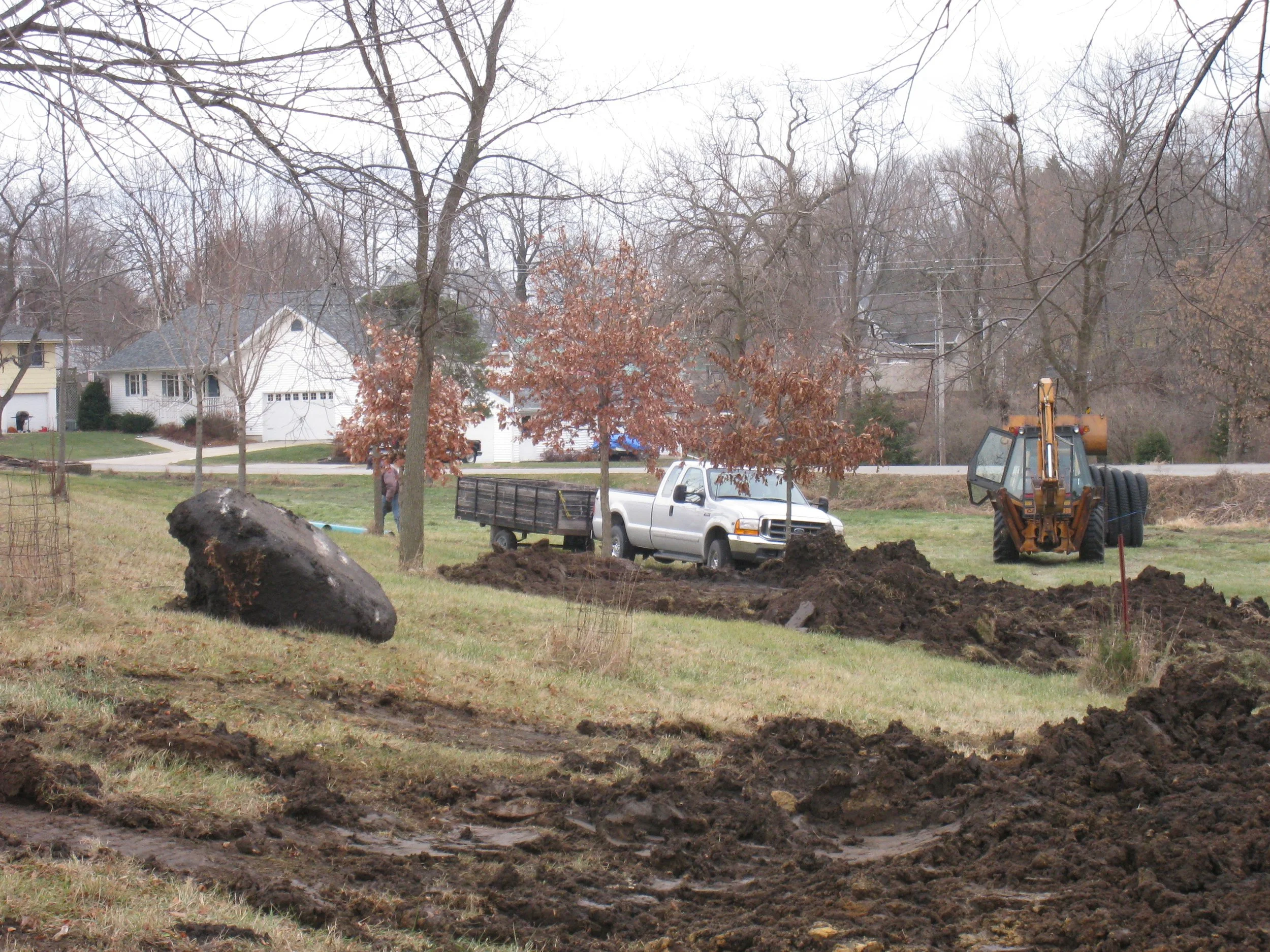
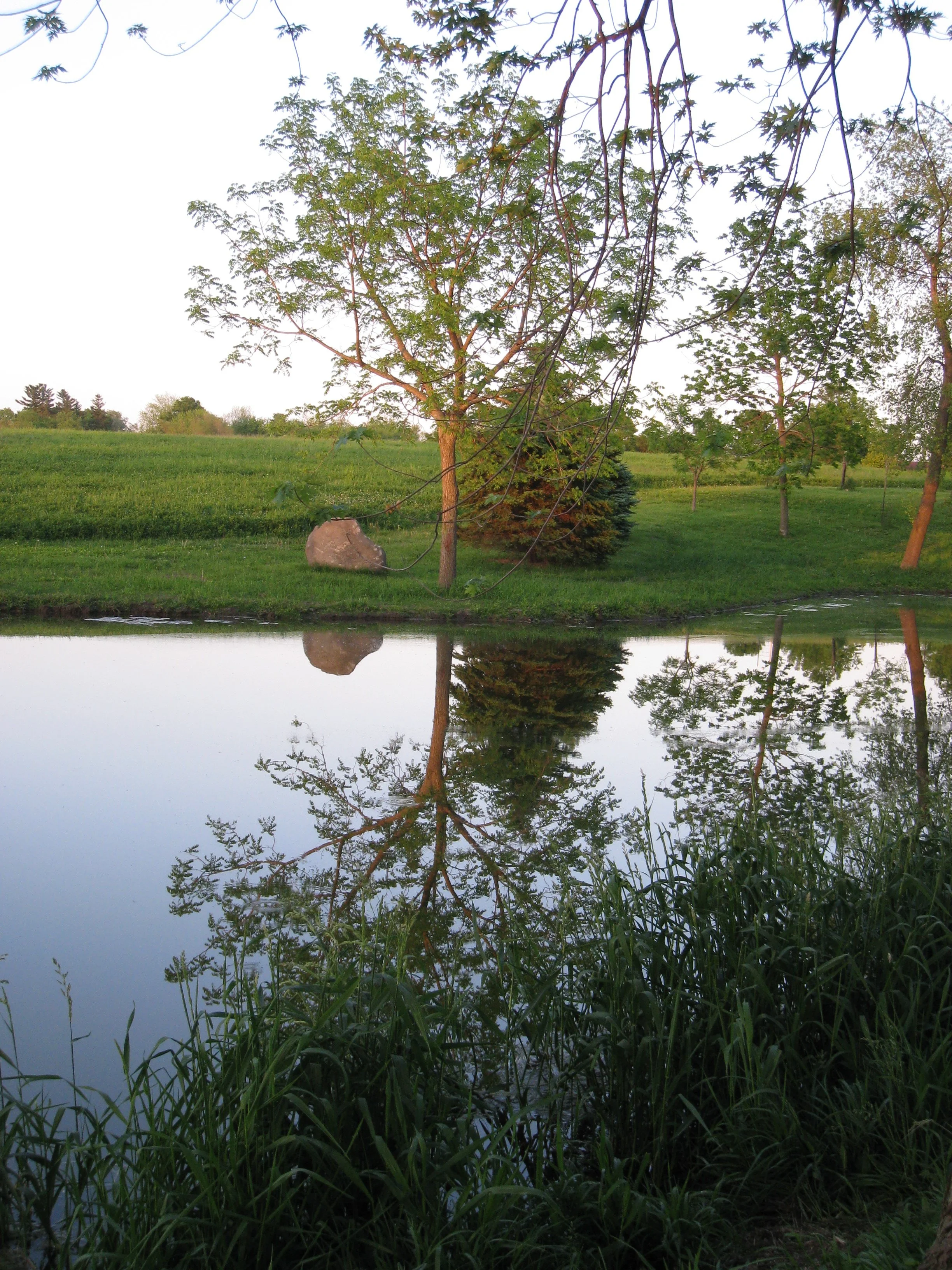
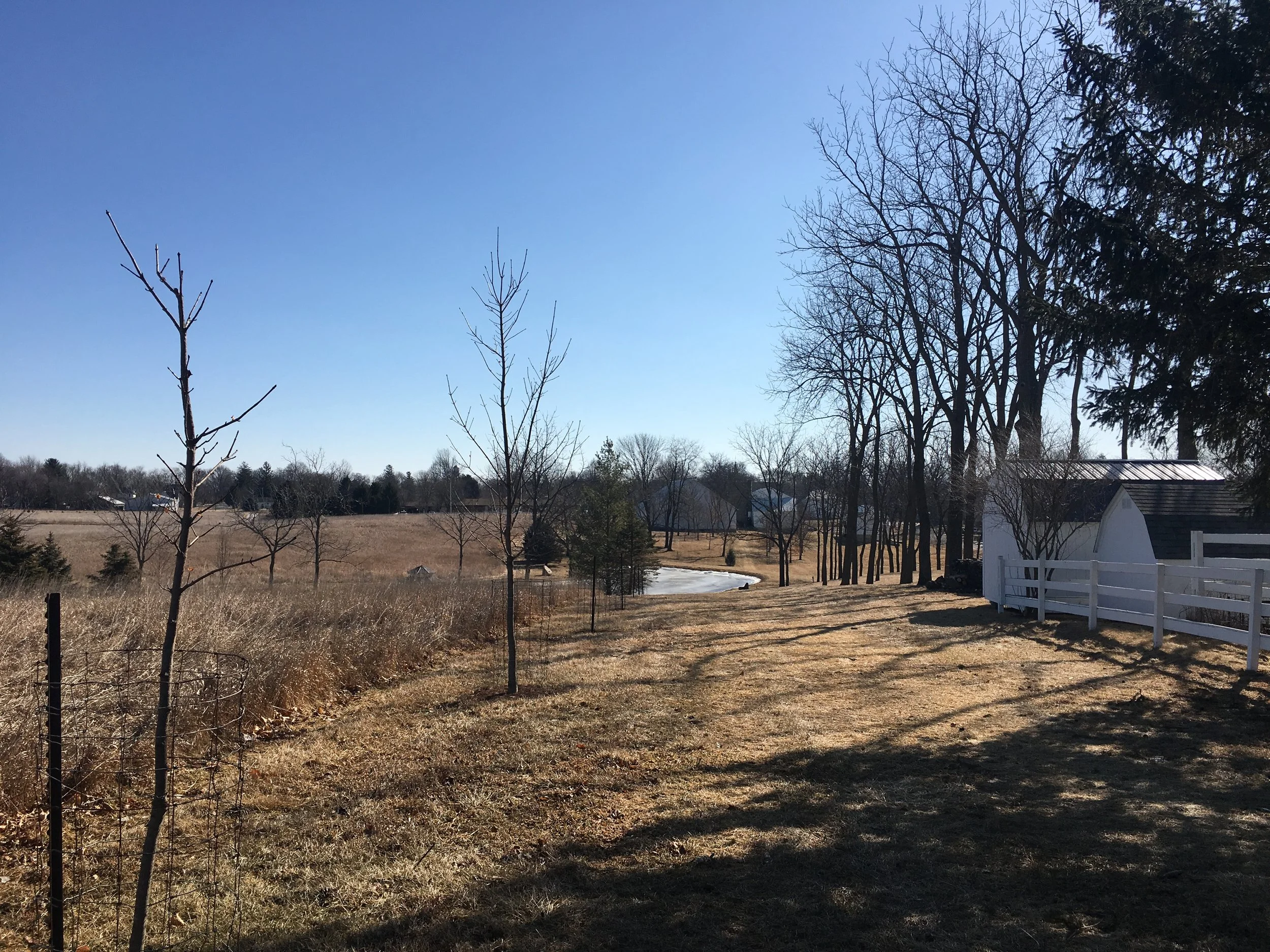
The original pond was dug in 1989 by Jerome Simon Construction out of Farley, Iowa, for a cost of $2,500. Due to muskrats compromising the dam, a second pond was dug in 2011. The second pond expanded the footprint of the original pond, and a new dam was built. The second pond was completed at a cost of $13,651 and was dug by Rabe Excavating from Blairstown, Iowa.
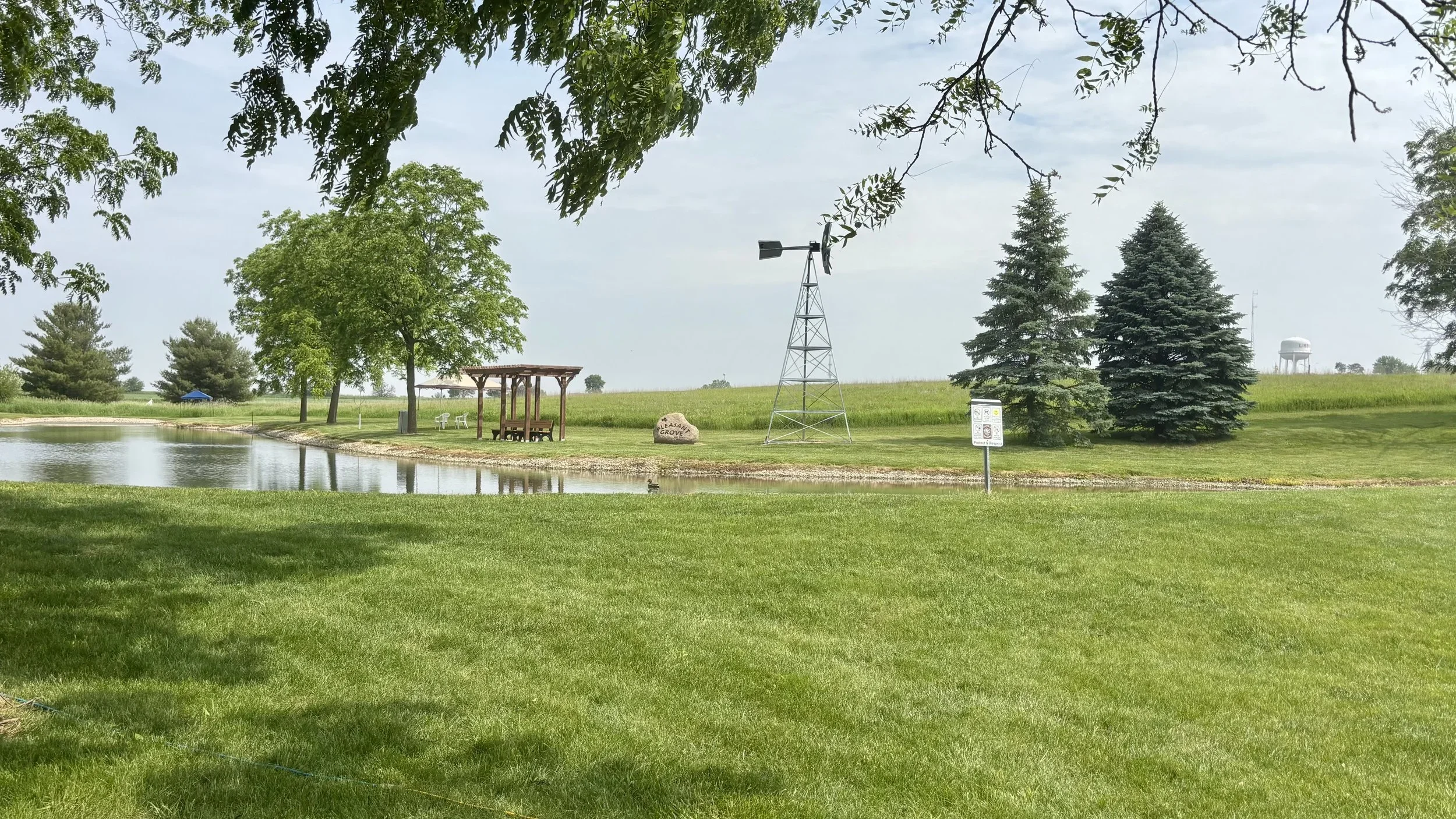
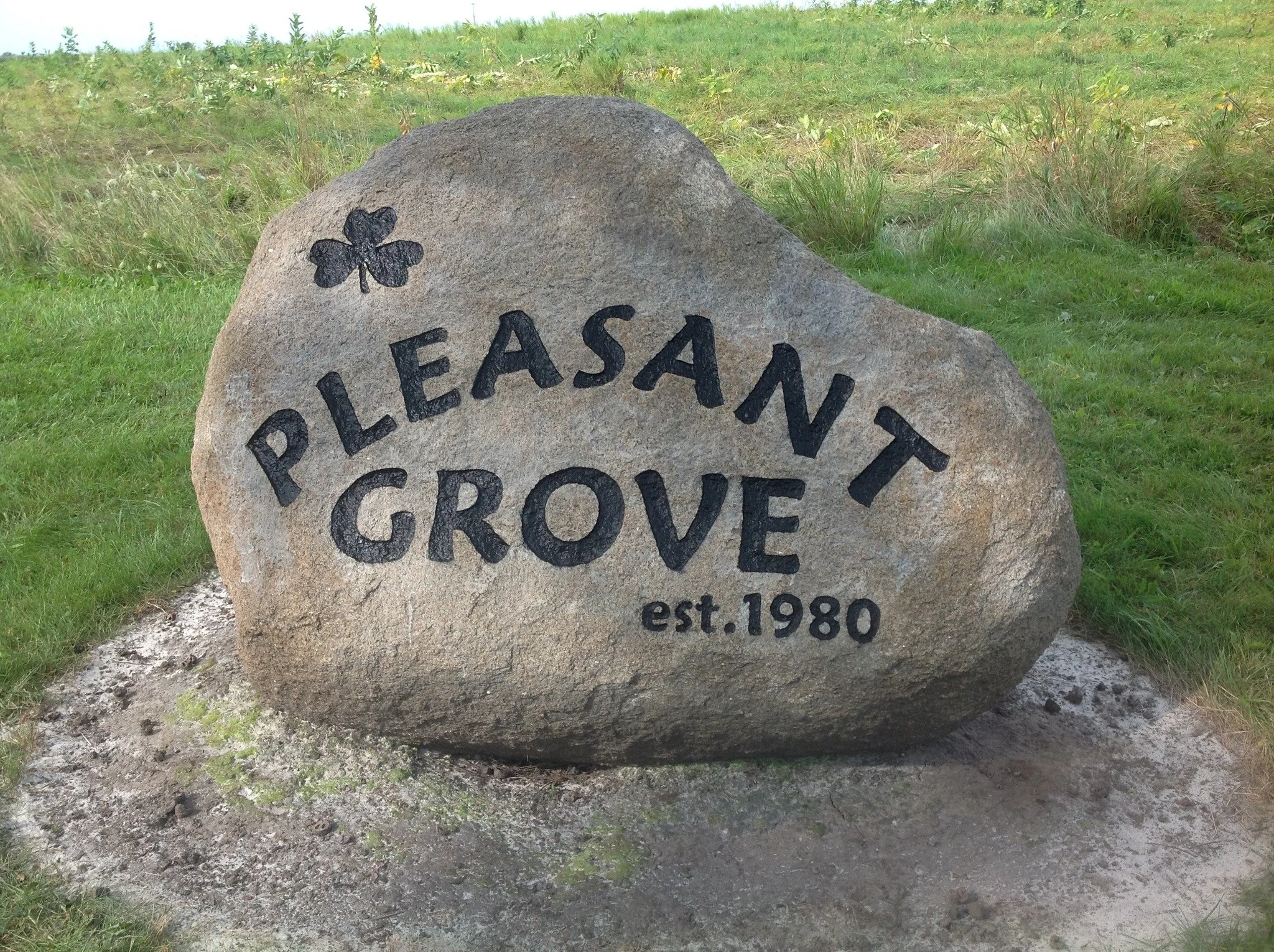
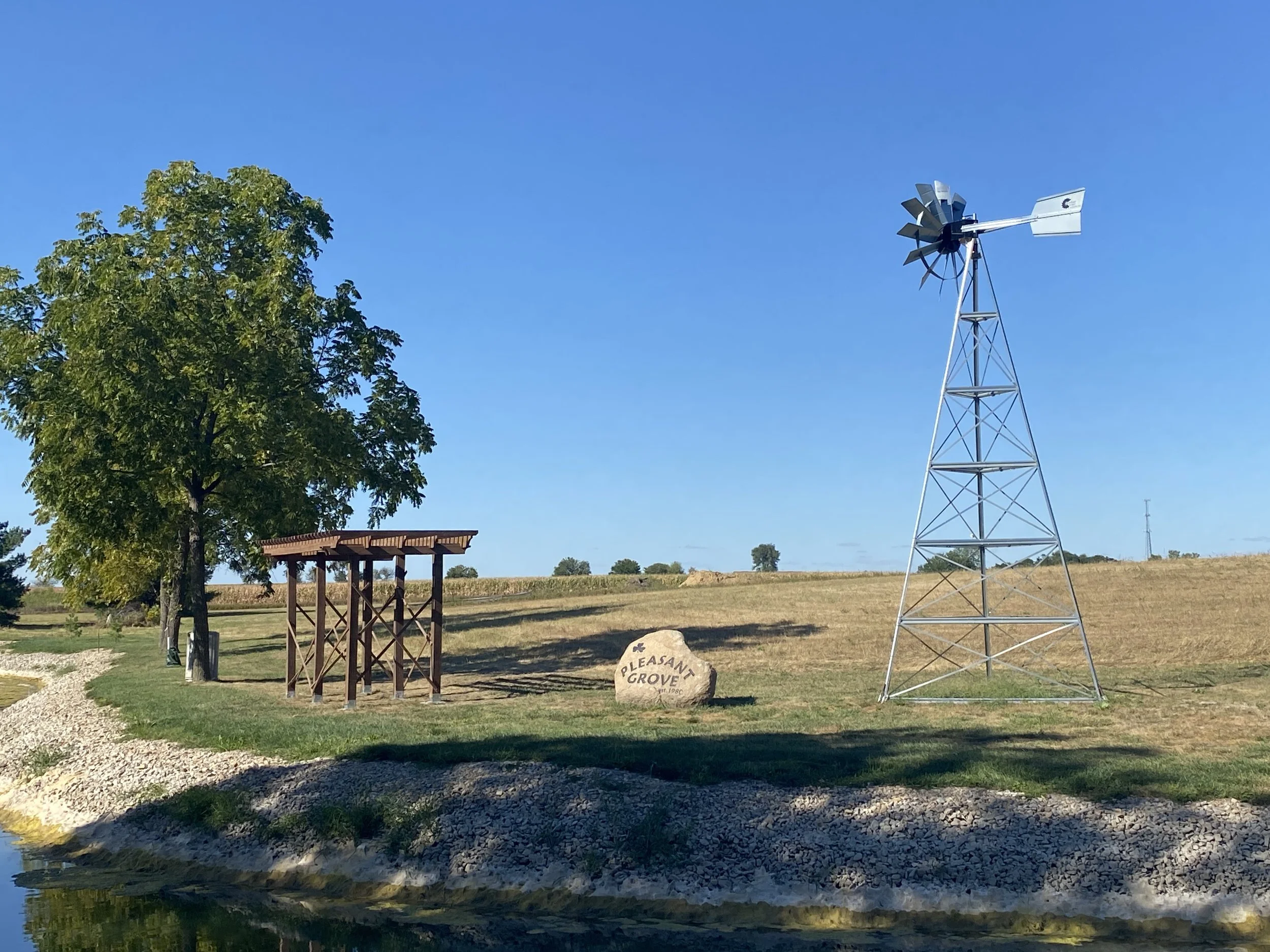
Pleasant Grove Rock & Pergola
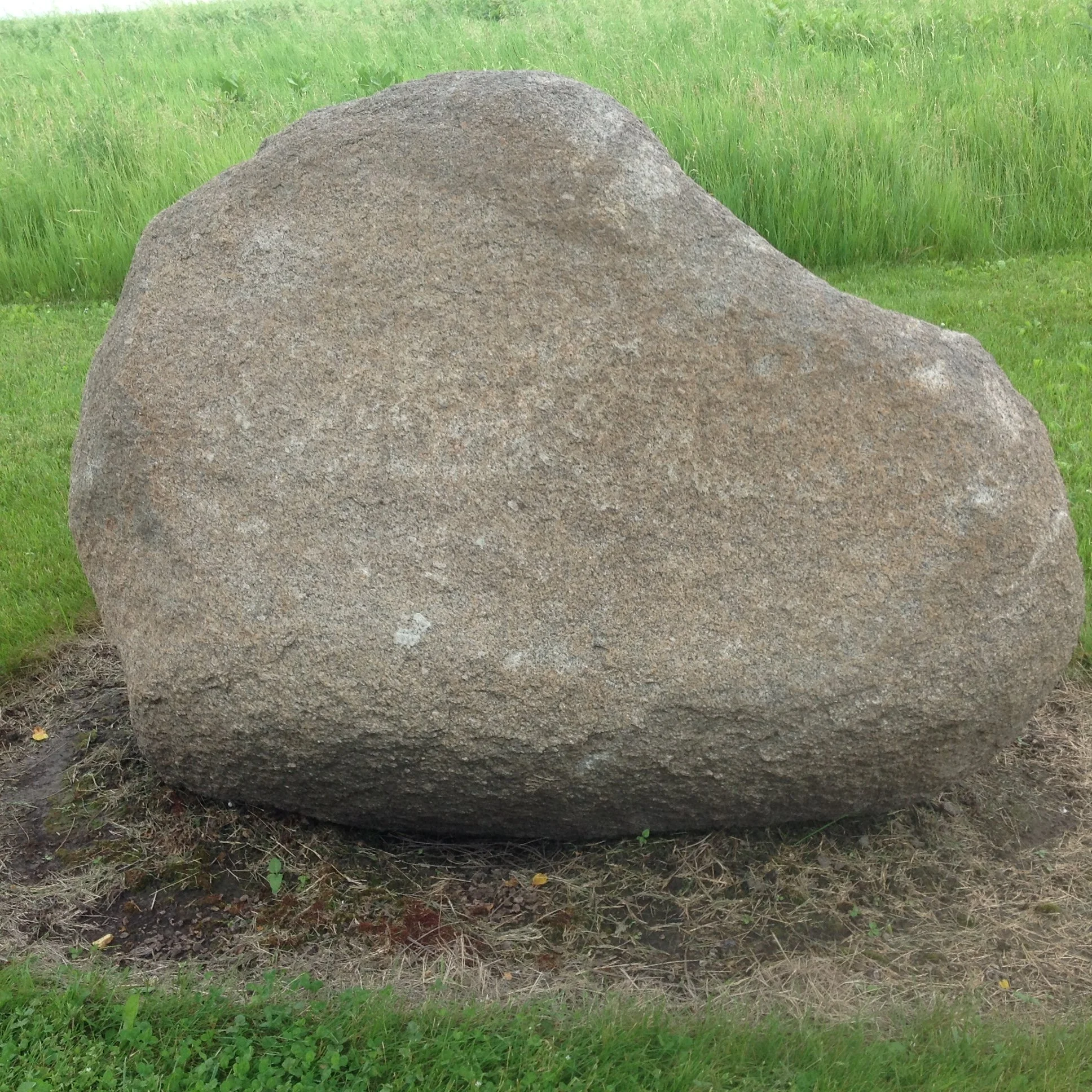
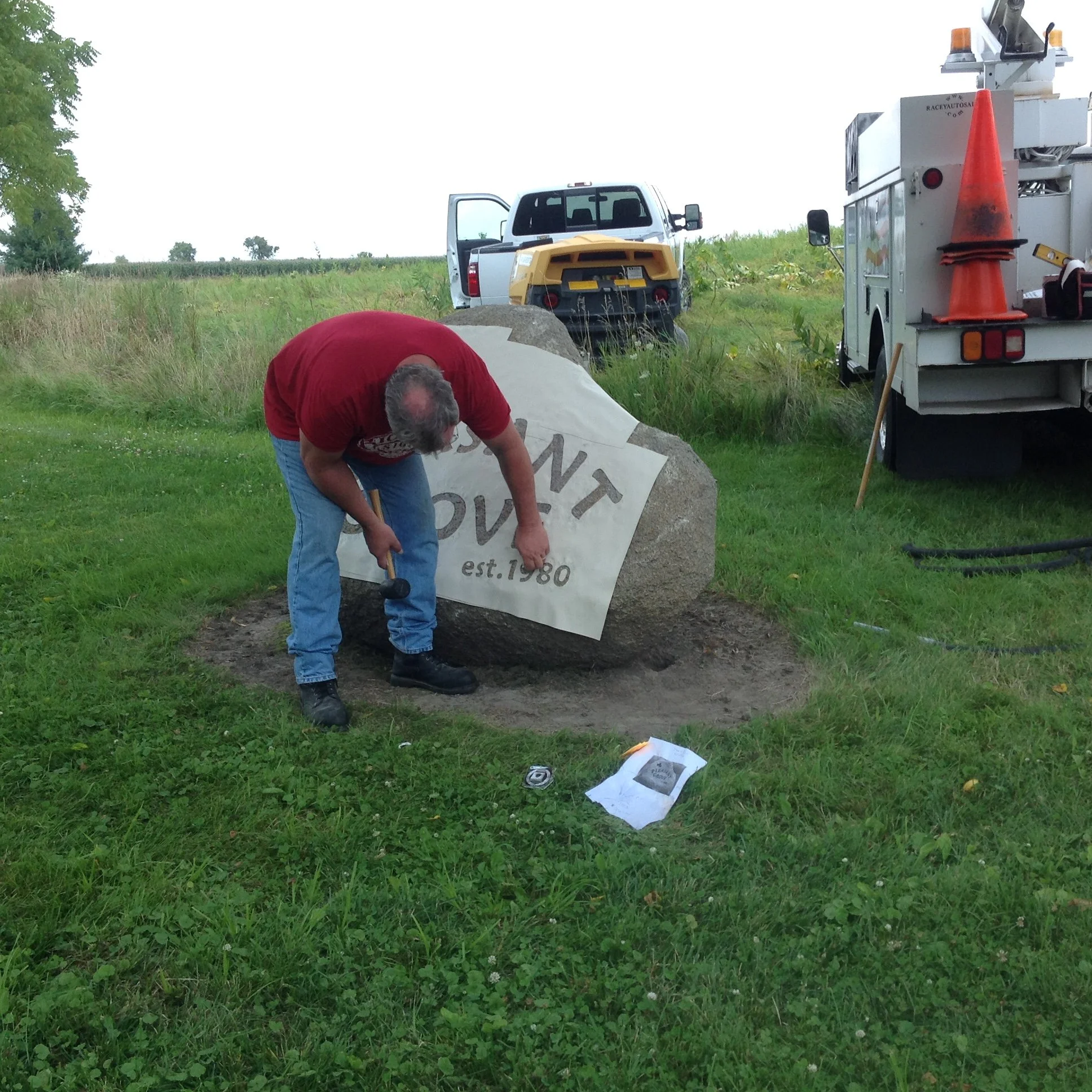
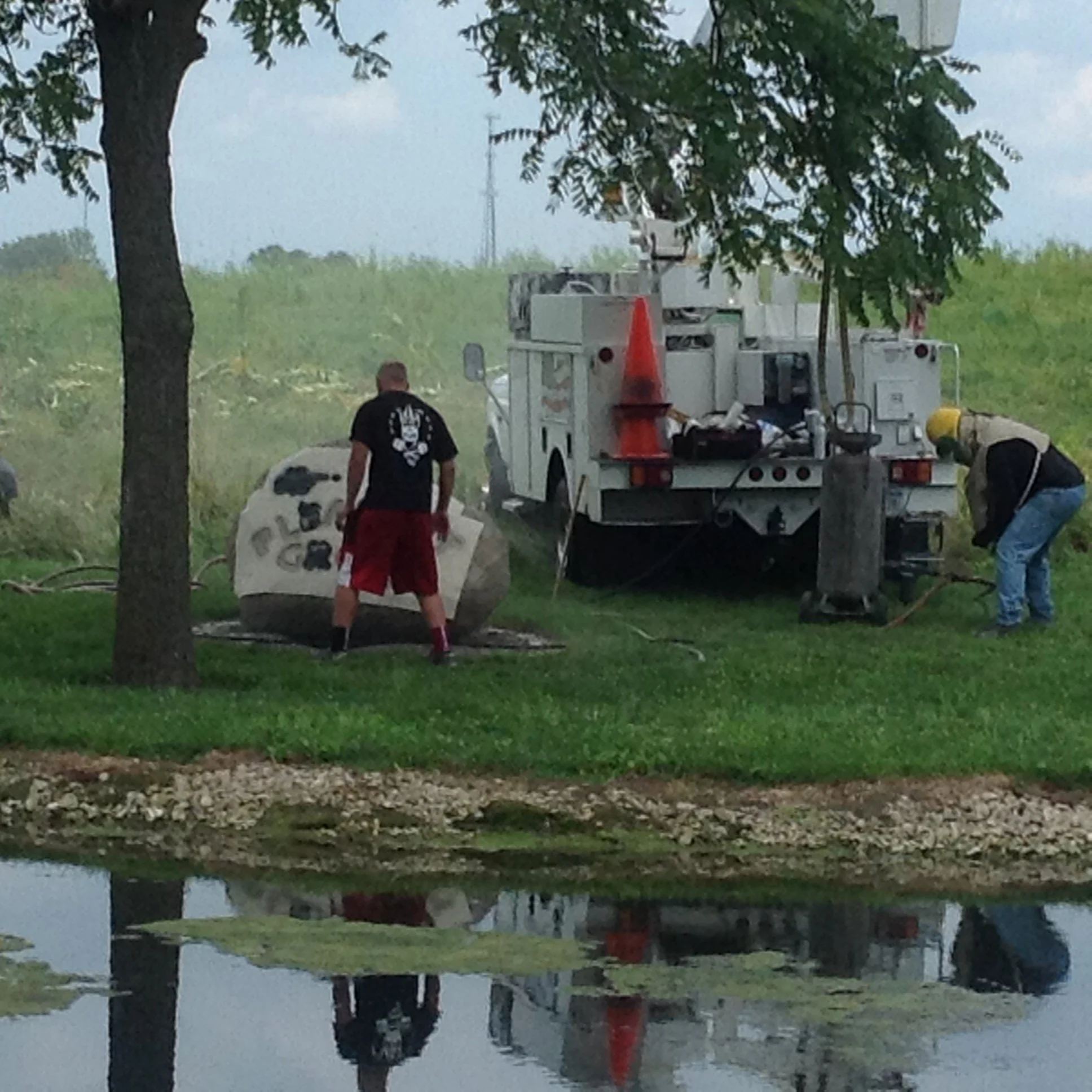
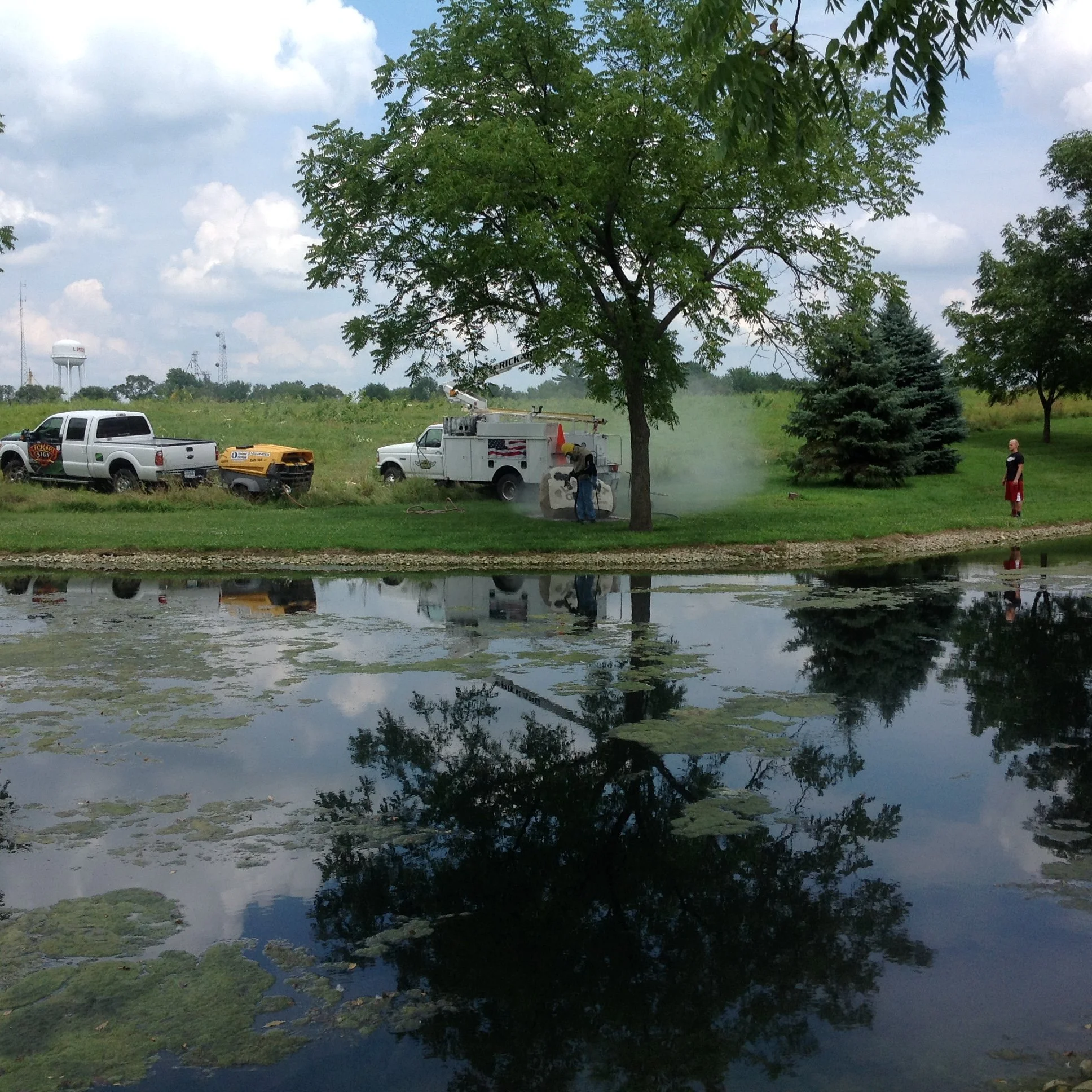
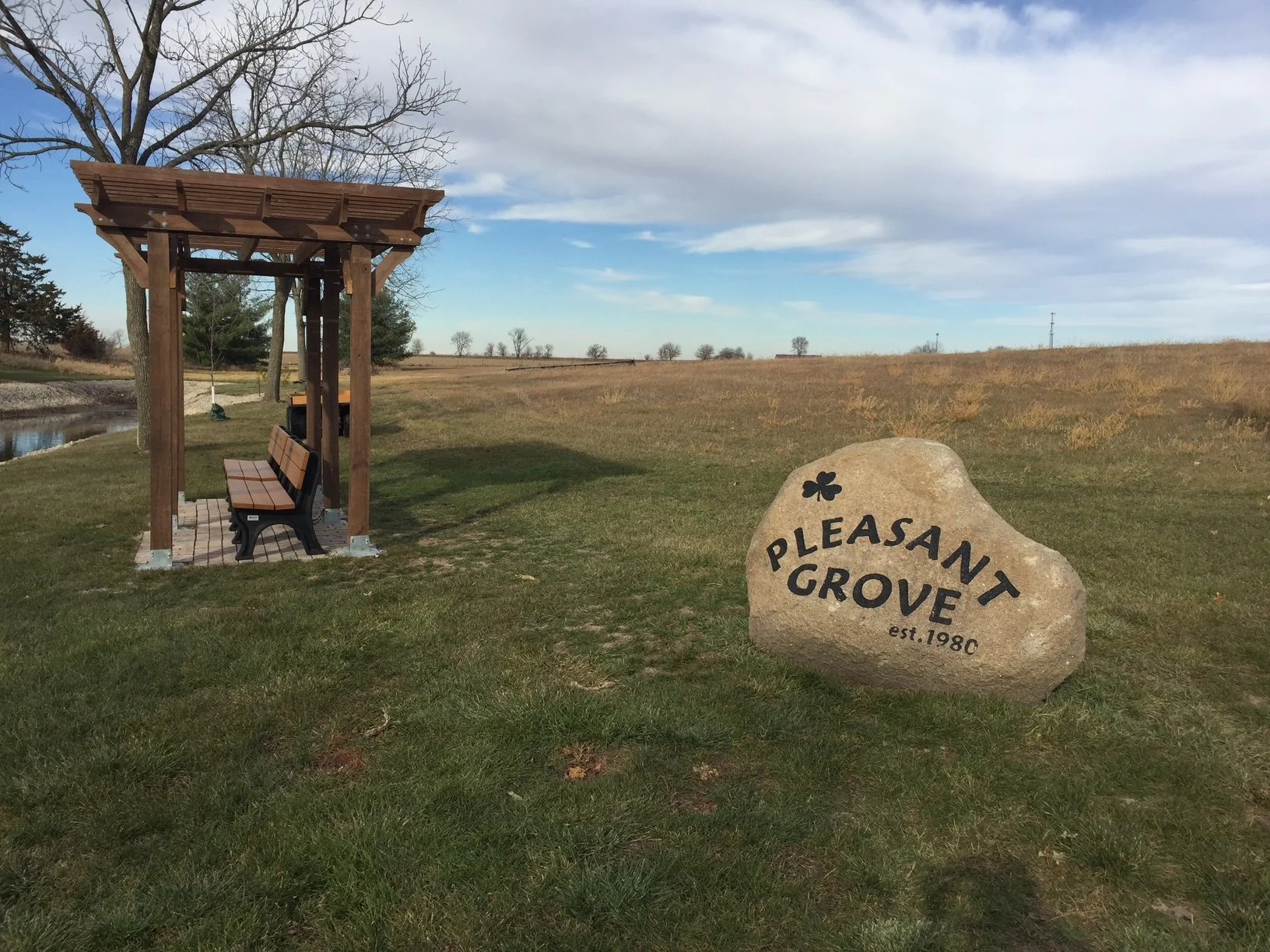
The rock appeared as we were digging the pond for the second time (the expansion of the pond). They were digging, when they ran into this monster of a rock and they managed to get it out of the pond area and up on the bank. Then it sat there for probably a year or more, maybe longer than that, when I was looking at it one day and I realized that it had a nice flat surface. Then I said we really should get something engraved on that rock, so I contacted a fellow in Cedar Rapids to do it. He came out one day and looked and gave a price that I felt was too expensive. Then I saw a place in Lisbon, called Rickard Sign and Design, that did rock engravings. So, I went over there and talked to him about getting something put on the rock, but I guess I’m getting ahead of the story. The first thing Doris and I had to agree on was what we would put on the rock. I had said we should try to get some Irish connection, a name with an Irish connection or something like that, and she said “No, it’s going to be Pleasant Grove”. So I said, “Okay, fine,” you know I just wanted my Irish token on there. So the Shamrock was Steve’s Irish connection. Then we got Rickard to come over to sandblast the engraving. He had to make an image first of what it was and then we agreed that it looks okay. That’s when we came up with the date, so that it could also be included. And a little back story on the date, the rock says 1980 because that’s when we began negotiating for the land for the 15 acre park. That is how the name Pleasant Grove came to be. Due to the historic Meyers Farmstead barn connection, the word “Heritage” was later added to the official name of the park.
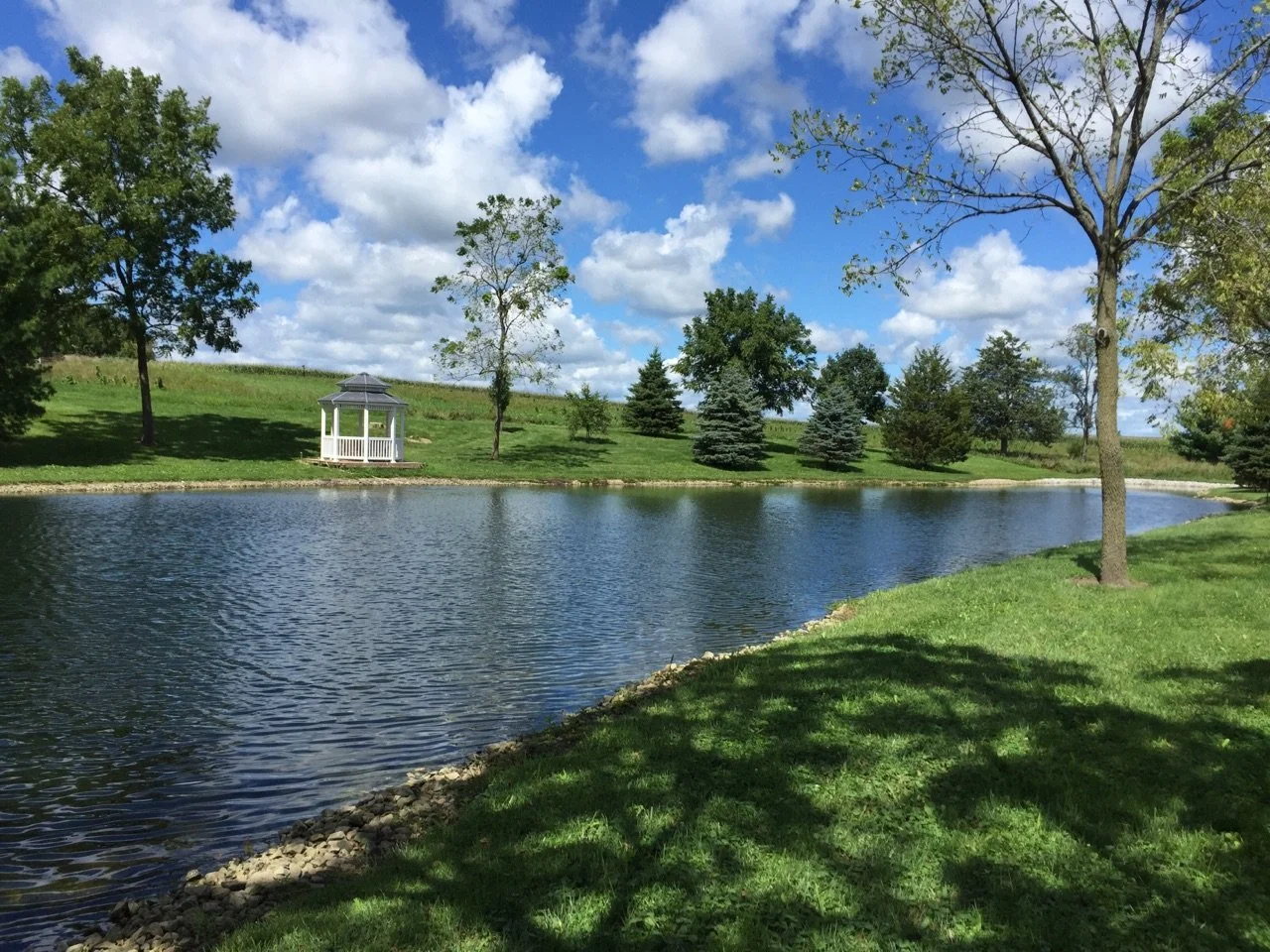
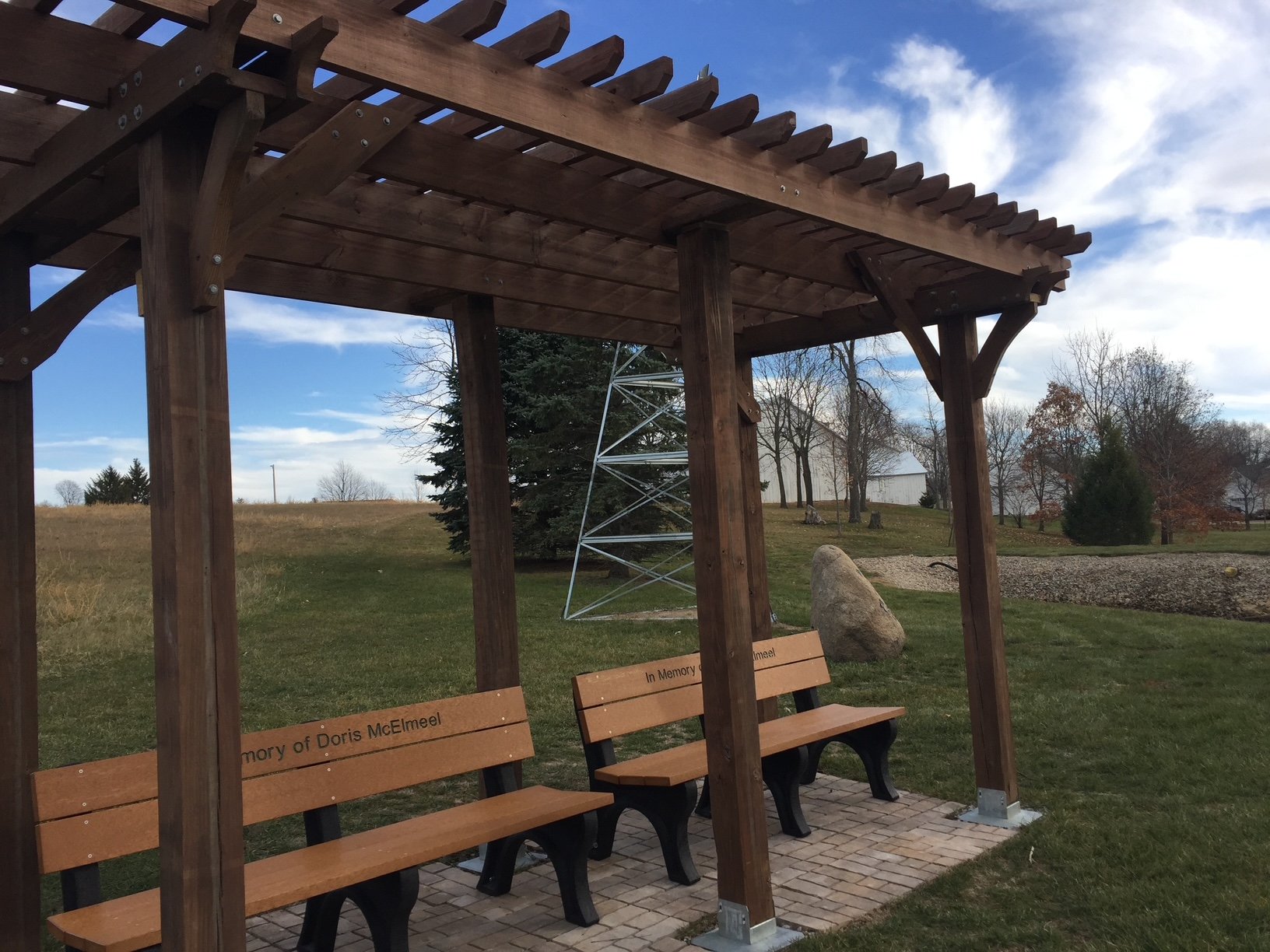
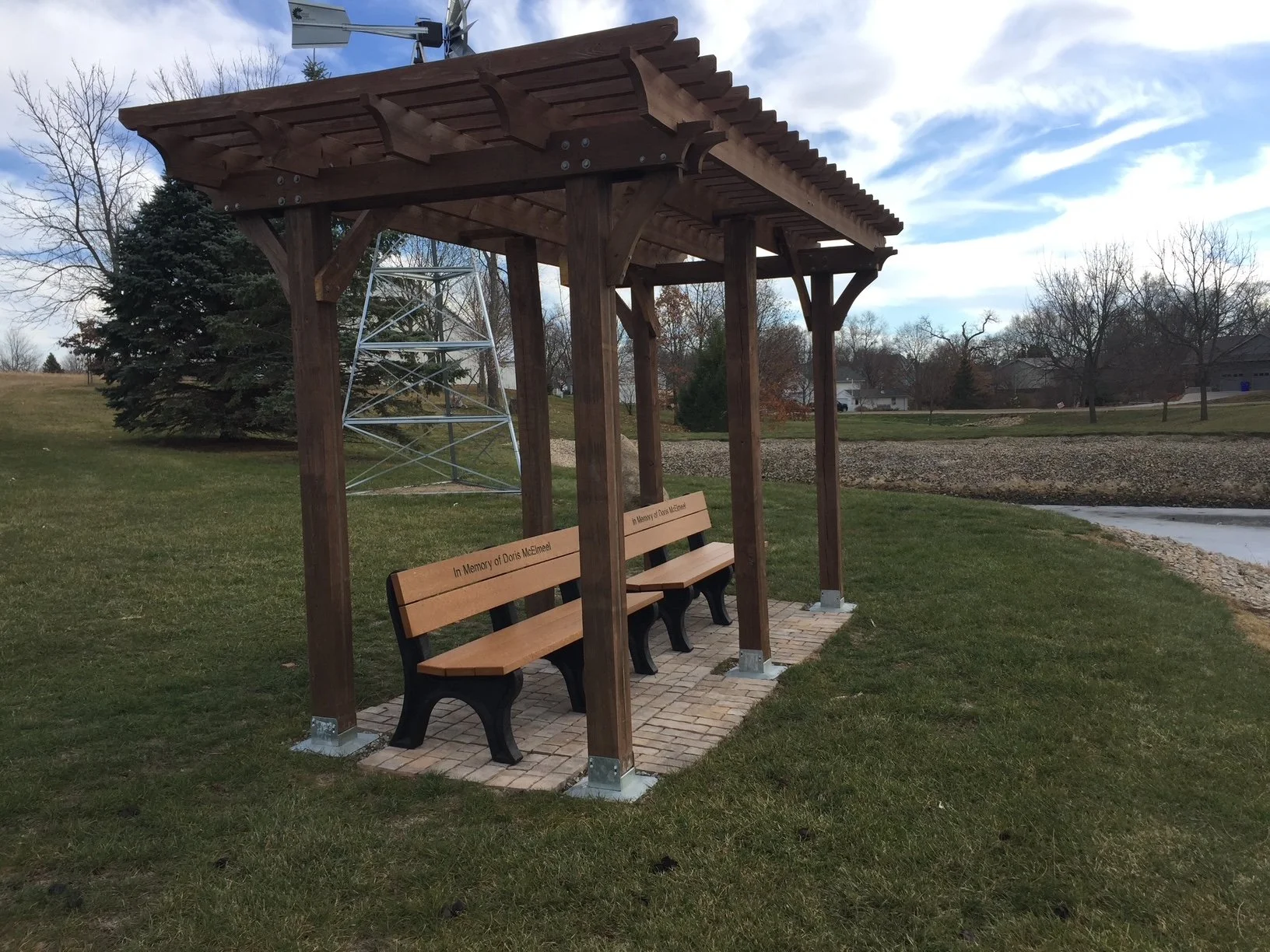
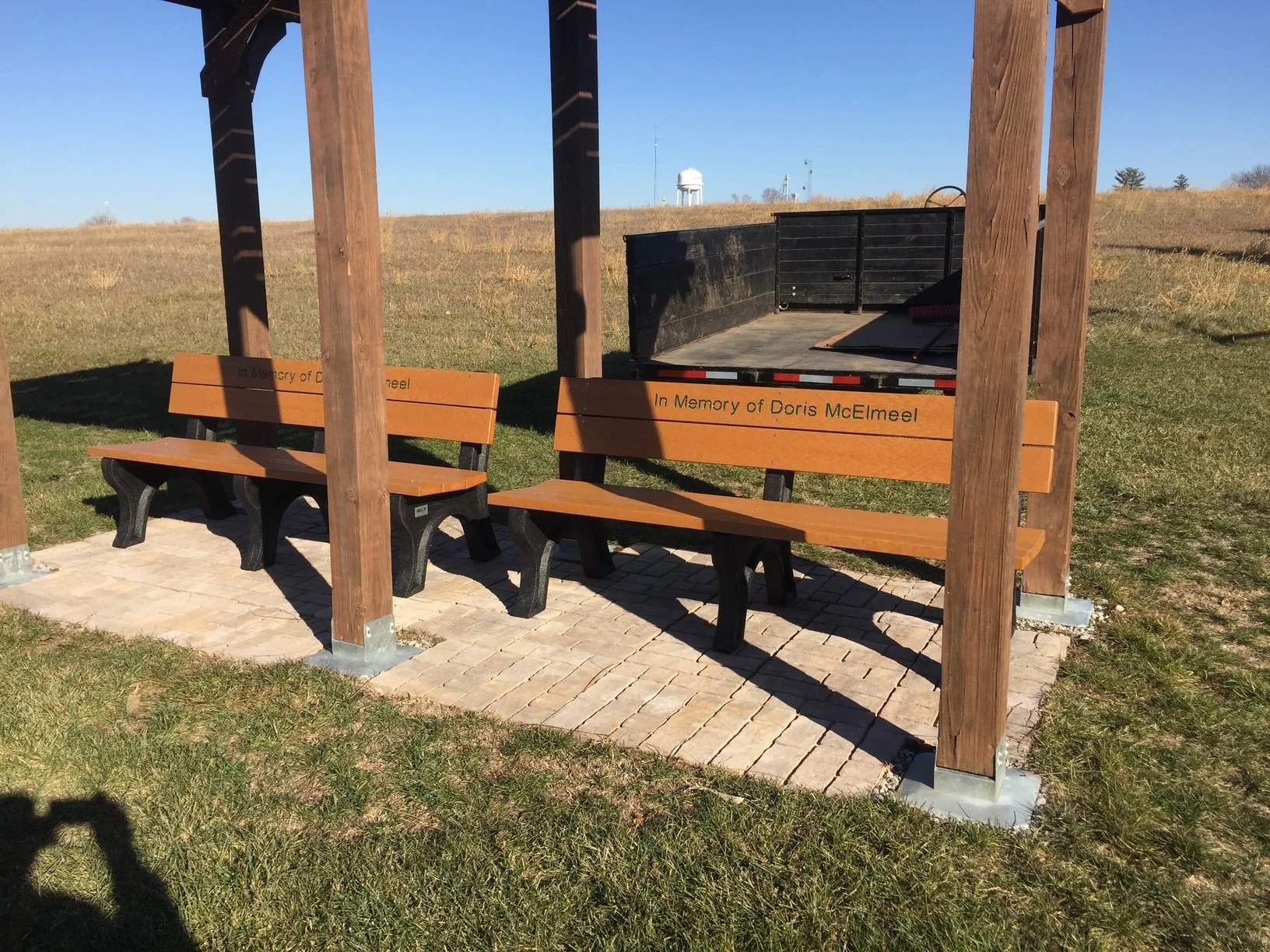
The pergola was originally built by the Master Gardners as a memorial to Doris McElmeel, with donations by the McElmeel family. The pergola construction was completed on June 9, 2019 at Lowe Park in Marion, Iowa. Unfortunately the derecho on August 10, 2020 with winds of over 142 mph damaged the pergola. In July 2022, the pergola was repaired and put back up, but again high winds that same day blew it down. On July 31, 2022, it was decided that the pergola would not be put back up at Lowe Park. On October 19, 2022, the pergola remains were moved to Lisbon. The pergola found its new home here at the Pleasant Grove Heritage Park when its installation by the pond was completed on September 23, 2023.
Walnut Grove
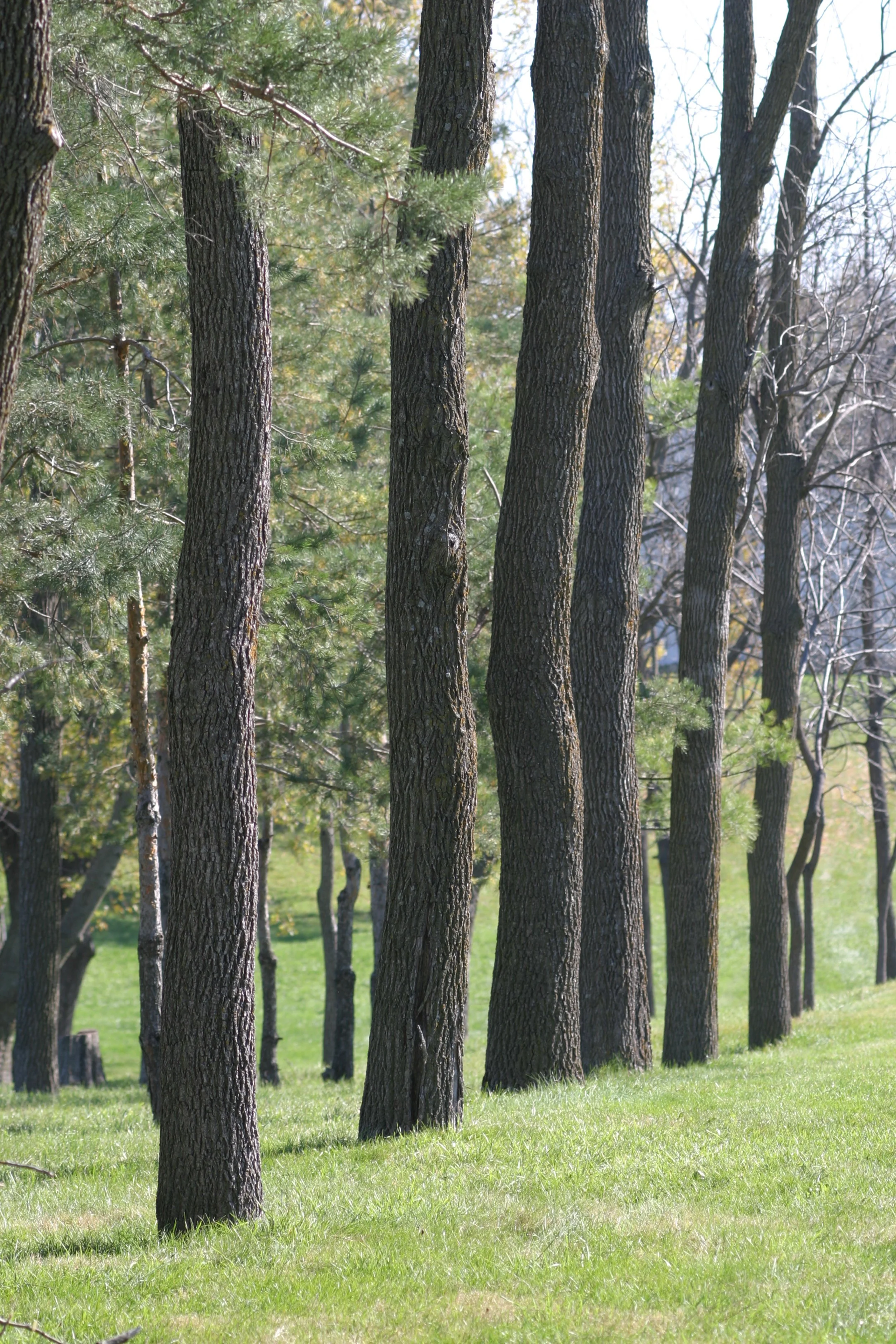
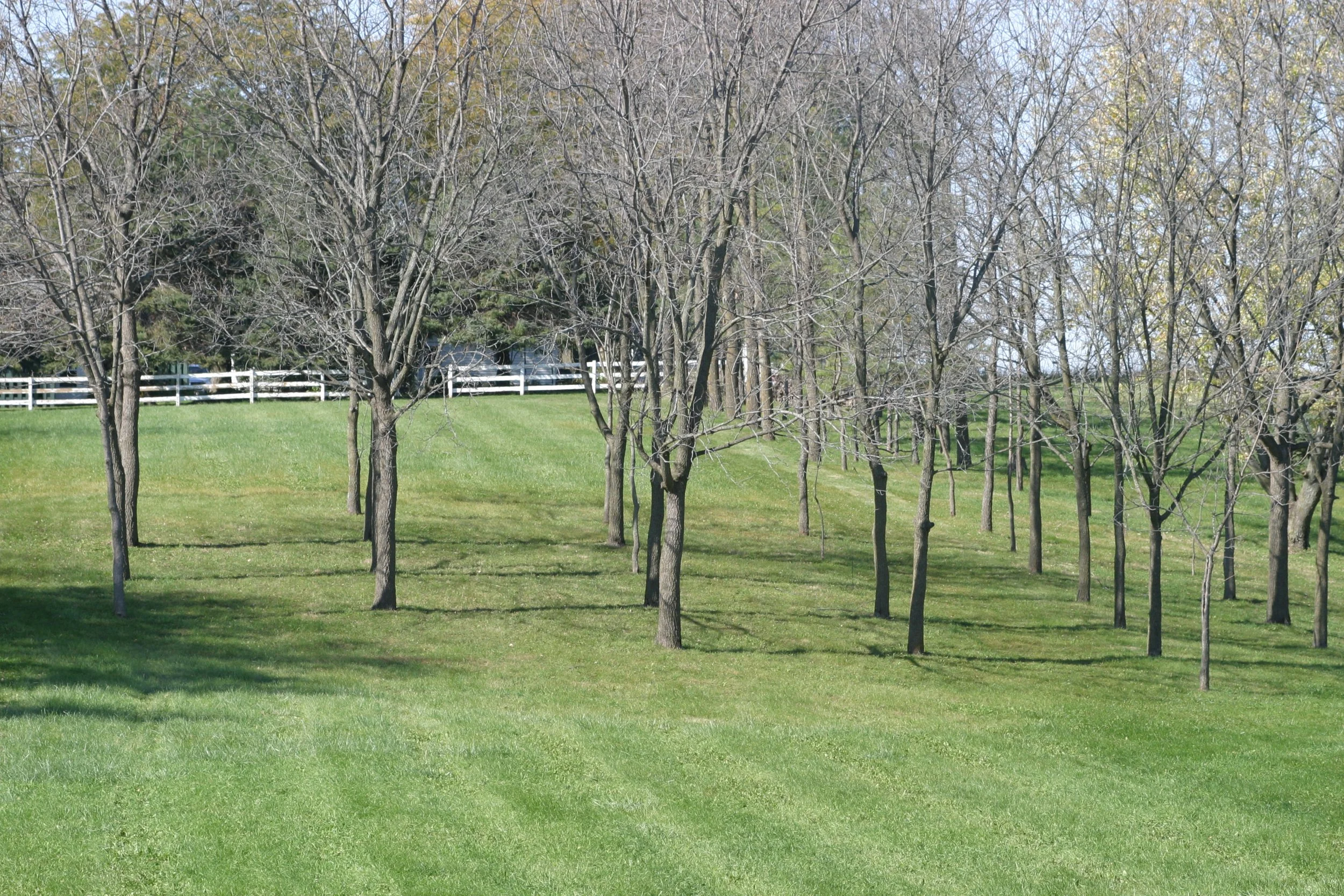
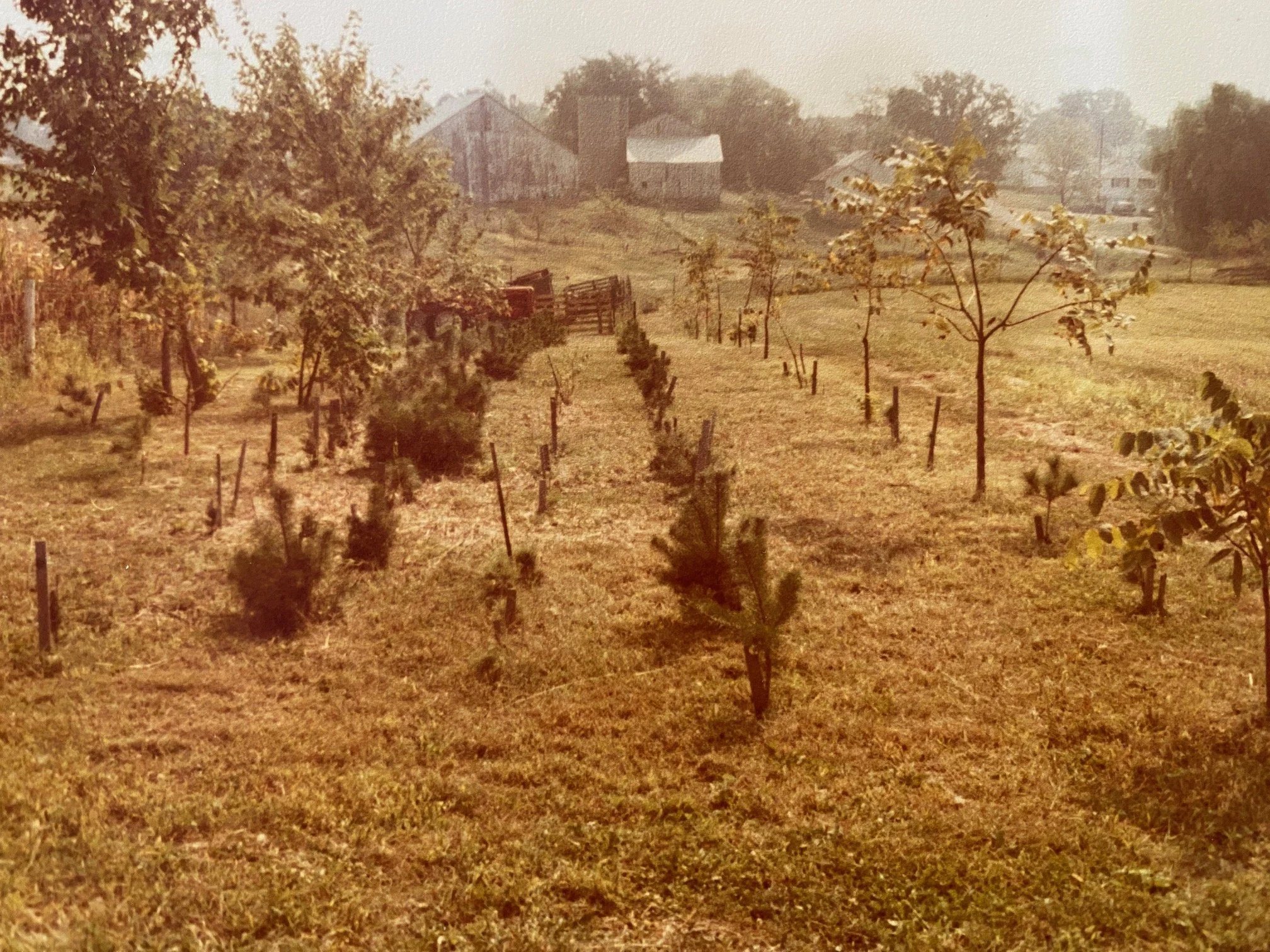
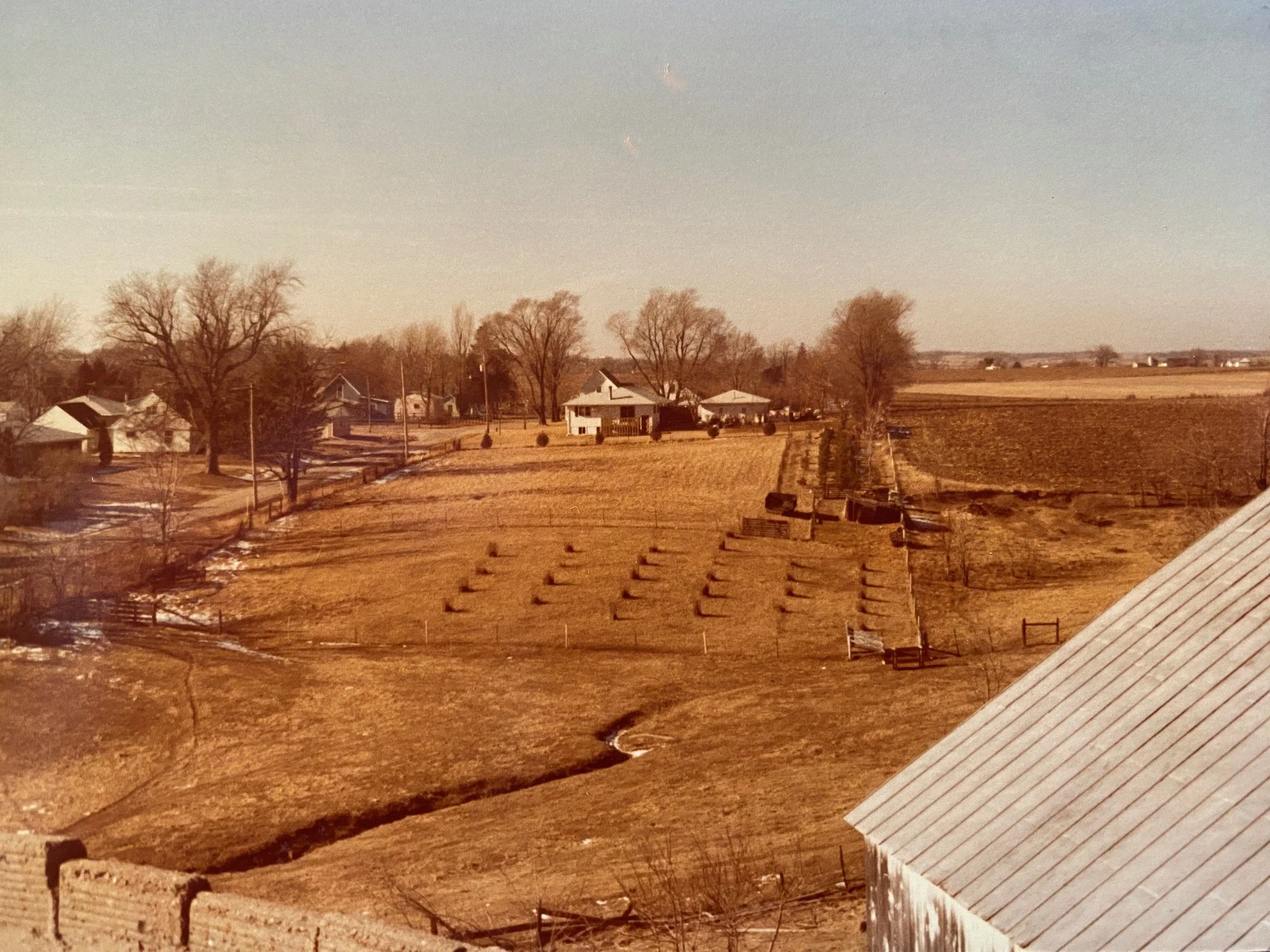
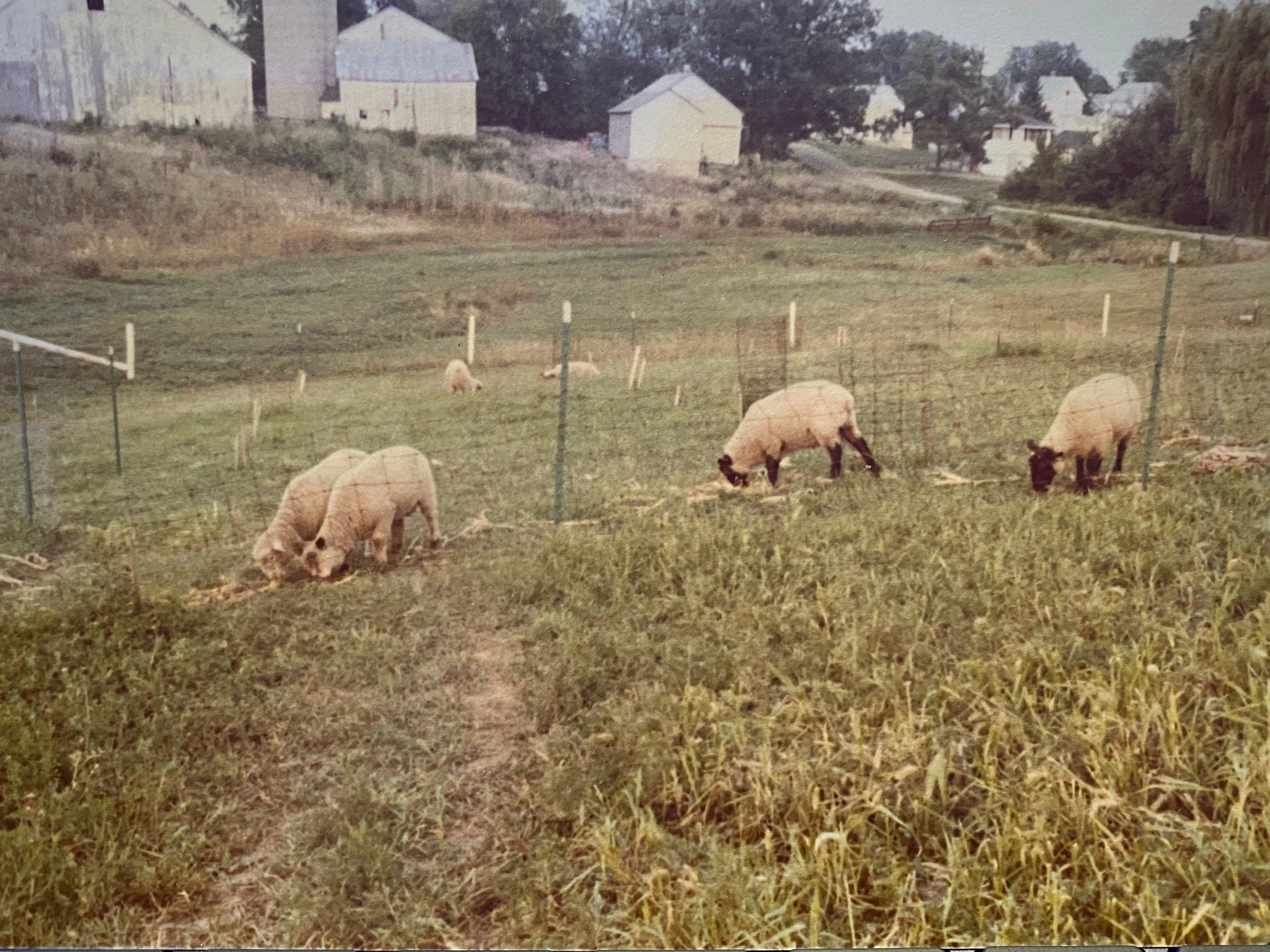
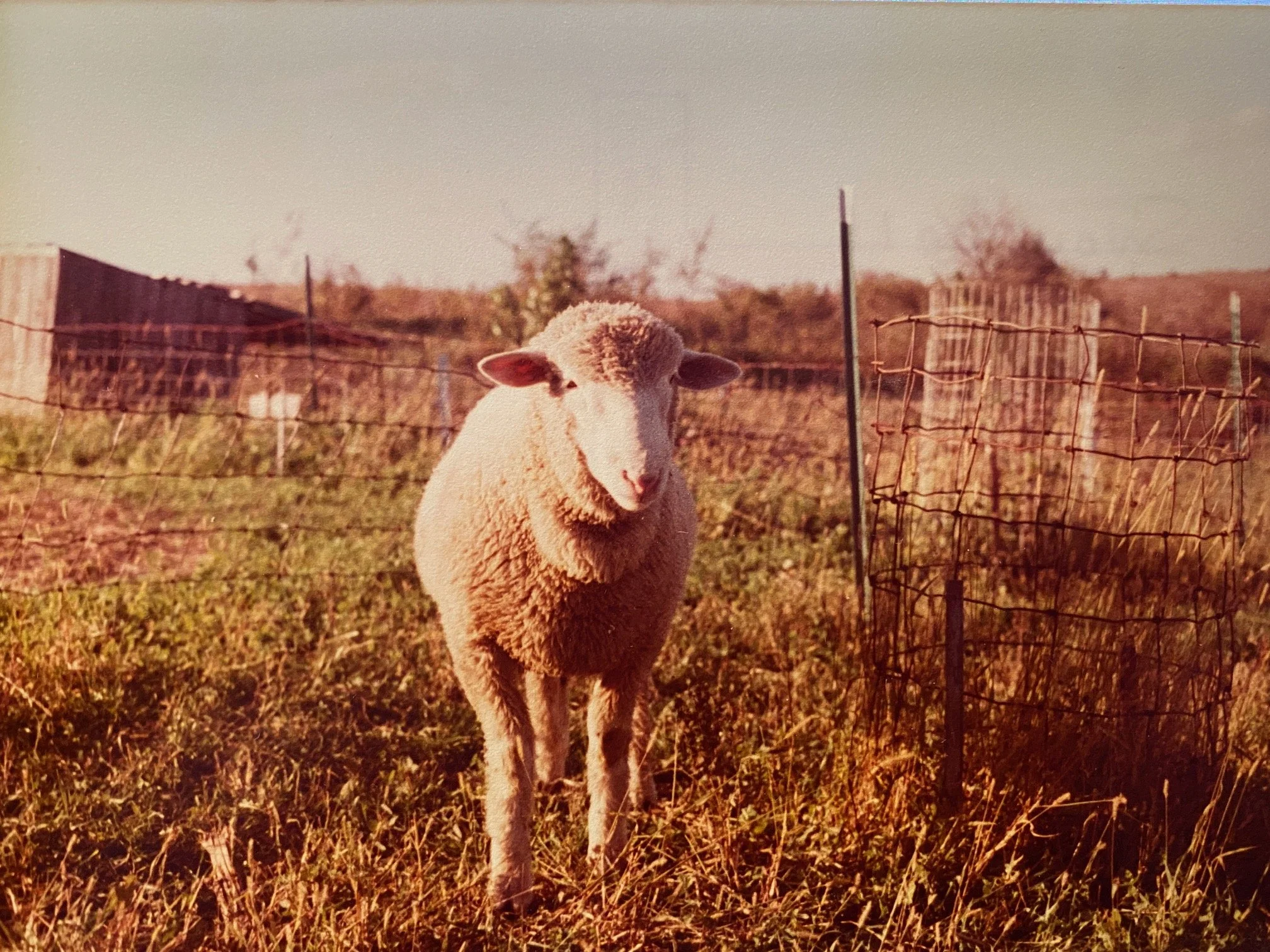
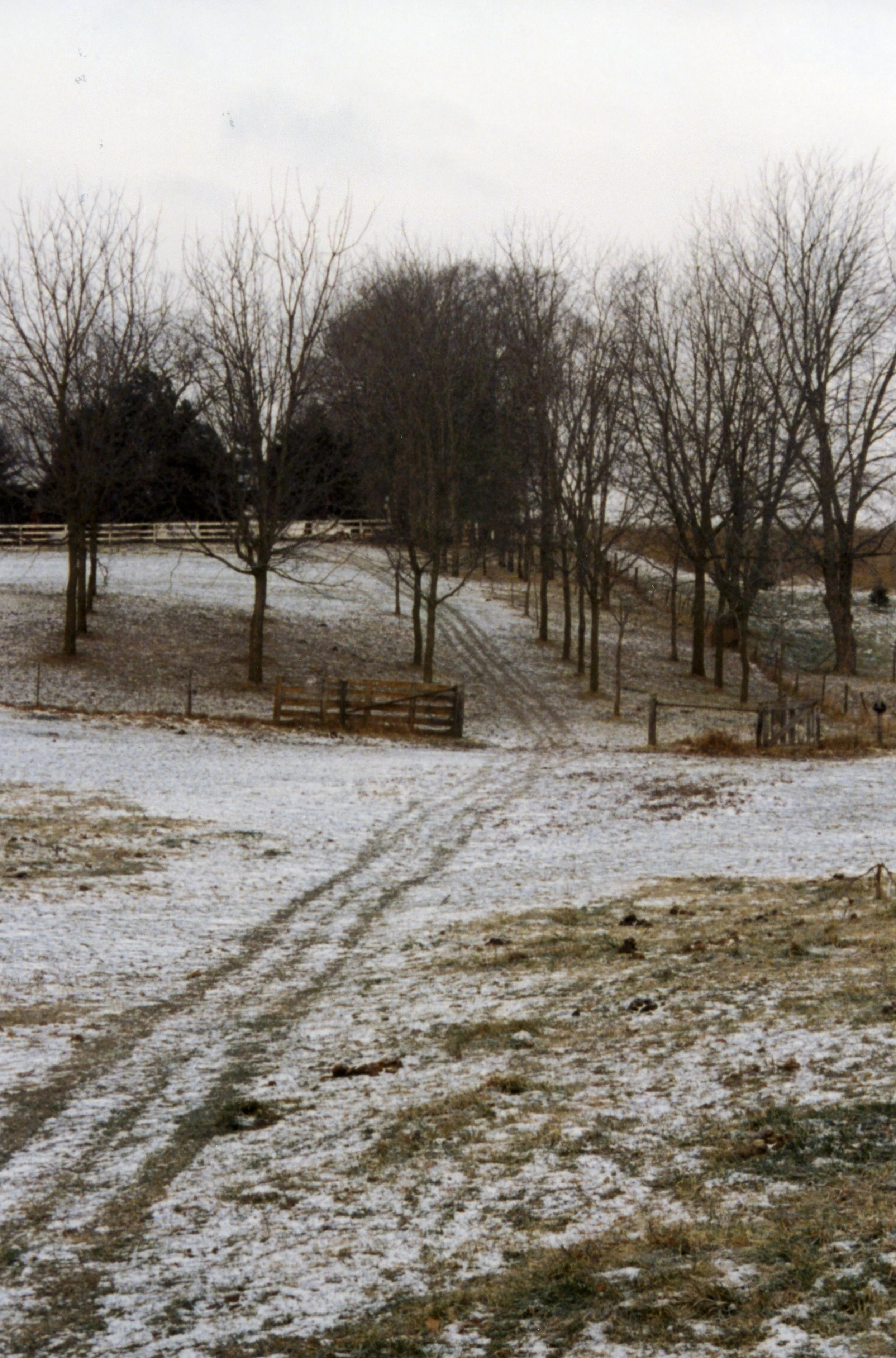
Steve had the idea of planting walnut trees for retirement income. We all did a lot of watering to keep those trees alive, not to mention keeping the sheep from eating the trees.
Prairie Restoration
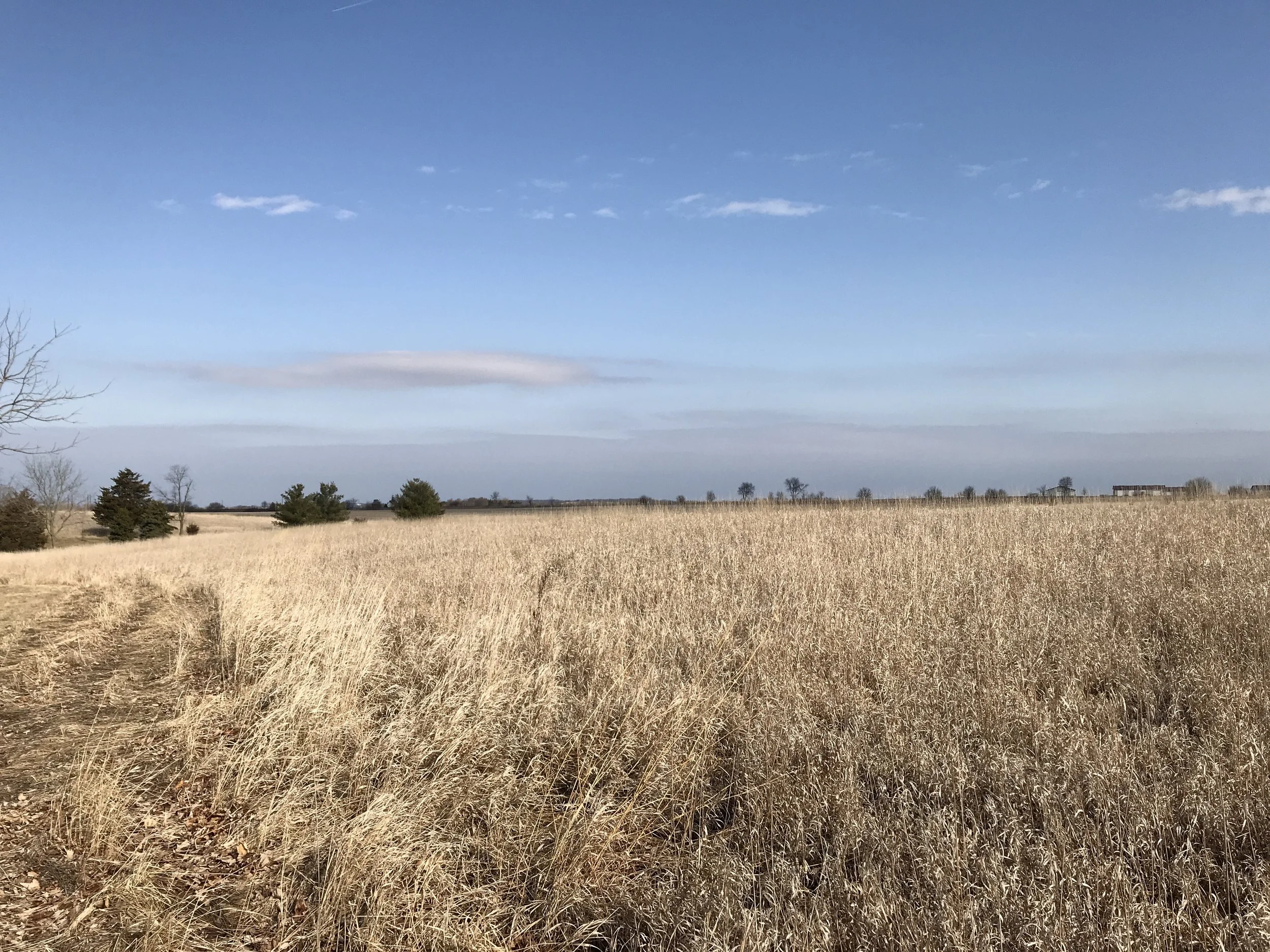
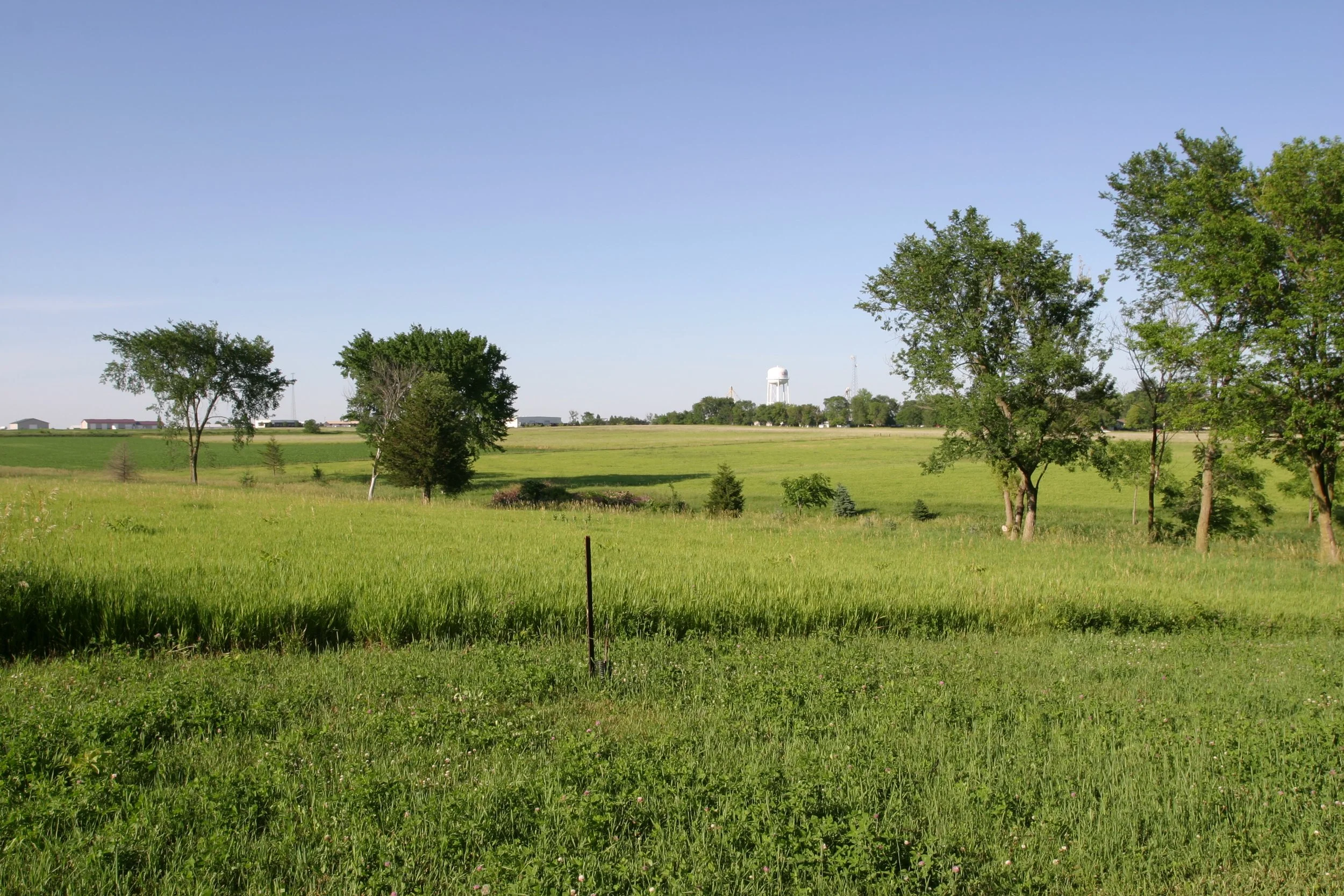
Pleasant Grove Heritage Park is launching a prairie reconstruction project on a 10-acre section. The aim of the project is to restore native tallgrass prairie to an area currently dominated by non-native plants. By reintroducing a diverse mix of native plants, this project seeks to improve ecological function, enhance biodiversity, and provide new opportunities for education and community engagement.
This land was previously enrolled in the Conservation Reserve Program (CRP), a voluntary federal program that pays landowners to take environmentally sensitive land out of farming and plant vegetation to improve water quality, reduce erosion, and support wildlife. Although the site remained undeveloped during its time in CRP, it is now mostly covered with invasive smooth brome grass and a few types of non-native clover, which provide limited habitat value. These plants were once commonly recommended for CRP projects, but planting smooth brome is now discouraged because it spreads aggressively and often forms a monoculture, crowding out other species.

This project will involve planting a highly diverse seed mix containing over 100 native species, with an emphasis on blooming tallgrass prairie plants. These species provide essential resources for pollinators, songbirds, and other wildlife, many of which are experiencing population declines due to habitat loss. In addition to supporting wildlife, native prairie vegetation has deep root systems that help stabilize soil, store carbon, and improve the infiltration and filtration of stormwater. Compared to non-native turf or pasture grasses, prairie plants are significantly more effective at sequestering carbon, contributing to long-term soil health and climate resilience.
Beyond its environmental benefits, the prairie reconstruction will serve the surrounding community in several important ways. Pleasant Grove Heritage Park is located directly adjacent to Meyers Meadow, an affordable housing community for senior citizens. Restoring the land to prairie will provide nearby residents with access to natural beauty, walking paths, and opportunities for outdoor recreation within walking distance. The site is also located just three blocks from the Lisbon Elementary, Middle, and High School campus and is less than ten minutes from schools in the Mount Vernon district. Teachers at Lisbon Community Schools have already expressed interest in using the site for outdoor classroom activities focused on ecology, biology, and conservation. Faculty from Cornell College have also indicated interest in using the area for research and student fieldwork.


The project is currently in the early planning phase. The first step is a comprehensive biodiversity survey to document existing plant and animal species. This baseline data will inform future restoration efforts and provide a point of comparison for measuring success over time. Site preparation and seed selection will follow, with a strong focus on using locally adapted native plant species to ensure long-term success. The current plan is to complete the prairie reconstruction in three sections, beginning with the western section by prepping the site this fall (2025) and seeding by January 2026.
As the communities of Lisbon and Mount Vernon continue to grow, projects like the Pleasant Grove Heritage Park prairie reconstruction become increasingly important. As development pressures increase, preserving and restoring natural spaces ensures that residents continue to have access to the ecological and recreational benefits they provide. This project represents an investment in both environmental sustainability and community well-being, helping to protect natural resources while fostering a stronger connection between people and the landscape around them.
This year, we’re using iNaturalist to document the present species diversity of plants, animals, and fungi at Pleasant Grove Heritage Park as part of our preparation for prairie restoration. By participating, you can help us create a valuable record of the species that call this area home!
What is iNaturalist?
iNaturalist is a free, easy-to-use platform that allows anyone—whether you’re a seasoned naturalist or a curious beginner—to document and identify species in the world around you. Observations contribute to a global database used by scientists, conservationists, and land managers to understand biodiversity and track environmental changes over time.
How to Use the iNaturalist Mobile App:
Download the App – Search for iNaturalist in the App Store (iOS) or Google Play (Android) and install it on your phone.
Create an Account – Sign up for free or log in if you already have an account.
Make an Observation:
Open the app and tap “Observe” (camera icon).
Take a clear photo of the species you want to document (plants, animals, fungi, insects, etc.). You can also upload photos from your gallery.
Add basic details like location and time (the app will autofill these if you have location services enabled).
Get Identifications – If you’re unsure what you found, the app’s AI suggestions and the iNaturalist community can help you identify it.
Submit Your Observation – Once uploaded, your observation becomes part of a global biodiversity database!
Why Participate?
By using iNaturalist at Pleasant Grove Heritage Park, you’re helping us:
Understand the ecosystem before prairie restoration begins.
Track changes in biodiversity over time.
Engage the community in hands-on conservation efforts.
Learn more about the plants and wildlife in your own backyard!
We invite you to explore, document, and share your discoveries! Every observation contributes to a deeper understanding of this special landscape. Join us in making a difference—one observation at a time!